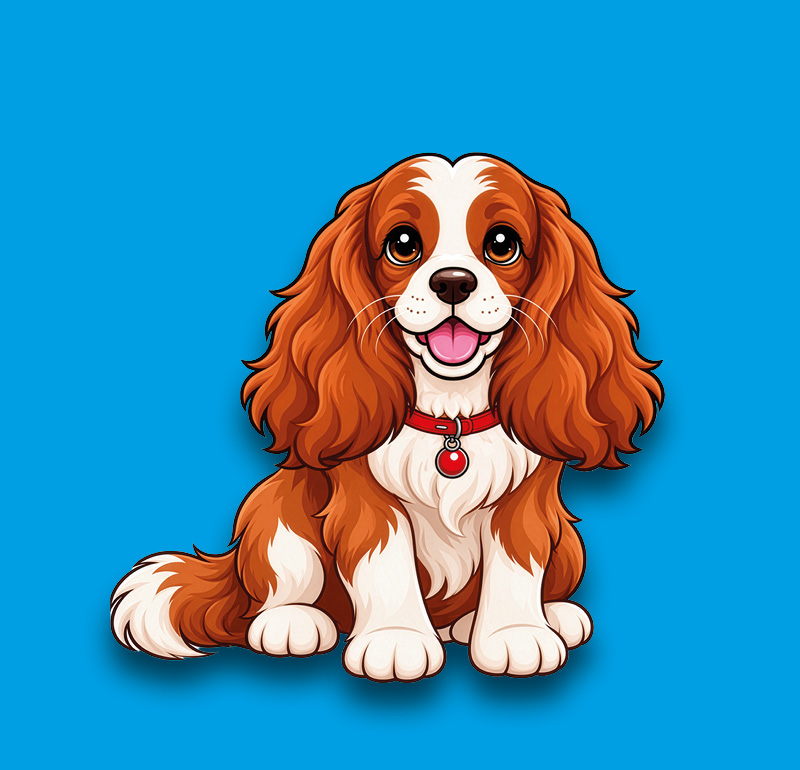


Cavalier King Charles Spaniel

Born for the lap, made for the heart

Temperament

AffectionateGentleGracefulPlayfulAdaptable

Pros

  • Excellent family dog
  • Adaptable to any home
  • Great with children
  • Easy to train

Cons

  • Prone to heart disease
  • Separation anxiety
  • Needs company
  • Health screening essential

Ancestry

Old toy spaniels42%
Old sporting toy spaniels30%
Asian flat-faced toys28%

Our best guess, not hard science. These figures come from history and old breeding records, our viewpoint, not proven fact.

PuppyAdolescentAdultSeniorAged0255075100024681012Age (years)Function & Health

Cost to care

Just like owning a car or any other liability, upkeep and maintenance is required — and dog ownership is no different. Particular breeds need more attention from the vet, others have higher grooming costs, while others will eat you out of house and home. We have built this tool to help you understand what to expect from owning this breed.

Low MaintenanceSick as a dog
Typical expected scenario
Annual cost*
£1,735
Lifetime cost*
£20,820

* Projected figures based on breed-typical UK costs (2026). Individual dogs will vary.

The Lifespan Diagram

A visual guide to how this breed moves through life. The horizontal axis shows age from birth to old age; the vertical axis represents overall function, health and quality of life. The curve rises quickly through puppyhood, holds high during the prime adult years, then gradually declines into the senior stage. The exact shape varies by breed. This is a conceptual illustration, not a clinical or veterinary prediction for any individual dog.

Method & sources

The curve score is a conceptual illustration, not observed veterinary data. Published median lifespan informed the x-axis. The y-axis was generated by piecewise mathematical functions.

KINGCHARLES SPANIEL82%OLDSPORTING TOY SPANIELS18%30%20%
Cavalier King Charles Spaniel

The Cavalier King Charles Spaniel is the revived longer-muzzled toy spaniel form, closer to old sporting and court spaniels than the shorter-faced King Charles type. Tap a circle inside to keep digging.

Suitability

ChildrenOtherdogsCatsSmall home1st-timeownerTimealone
Children
Other dogs
Cats
Small home
1st-time owner
Time alone

Scores reflect typical breed traits. Individual dogs vary with upbringing and environment.

Exercise needs

45min/dayDaily average
🚶Moderate
Copes with rest days
45m
Mon
45m
Tue
45m
Wed
45m
Thu
45m
Fri
50m
Sat
50m
Sun

Cavaliers adapt well to their owner's lifestyle but need daily walks. Their heart condition means monitoring exercise tolerance as they age.

Typical breed guidelines. Individual dogs vary by age, health and temperament.

Grooming

Long silky coat
30minHome grooming per week
£40/moProfessional groomingEvery 8-10 weeks
Shedding
Moderate
Tools you will need
Pin brushSlicker brushWide-tooth comb

Cavalier feathering tangles easily and needs brushing several times a week. Pay particular attention to ears and leg feathers.

Typical breed guidelines. Costs vary by location and coat condition.

Training

2out of 5EasyHard
Gentle and willing
  • Eager to please and picks up basic commands readily
  • Responds beautifully to gentle positive methods
  • Sensitive and bonds deeply with their trainer
Excels atObedience, therapy work and trick training
Watch out forTheir desire to be close can make independent work difficult -- build confidence gradually

Typical breed traits. Individual dogs vary with socialisation and consistency of training.

Cavalier King Charles Spaniel70%King CharlesSpaniel👁60%Old toy spaniels👁40%Asian flat-facedtoys👁30%Old sporting toyspaniels👁

Known health conditions

Cavaliers have two breed-defining health conditions -- Mitral Valve Disease and Syringomyelia -- that affect the majority of the breed by middle age. Thorough health screening is non-negotiable.

ConditionSeverityLikelihood

This is a general guide based on published breed health surveys and veterinary literature. Not all dogs will develop these conditions. Always obtain health-tested parents from a responsible breeder and maintain regular vet check-ups.

Back