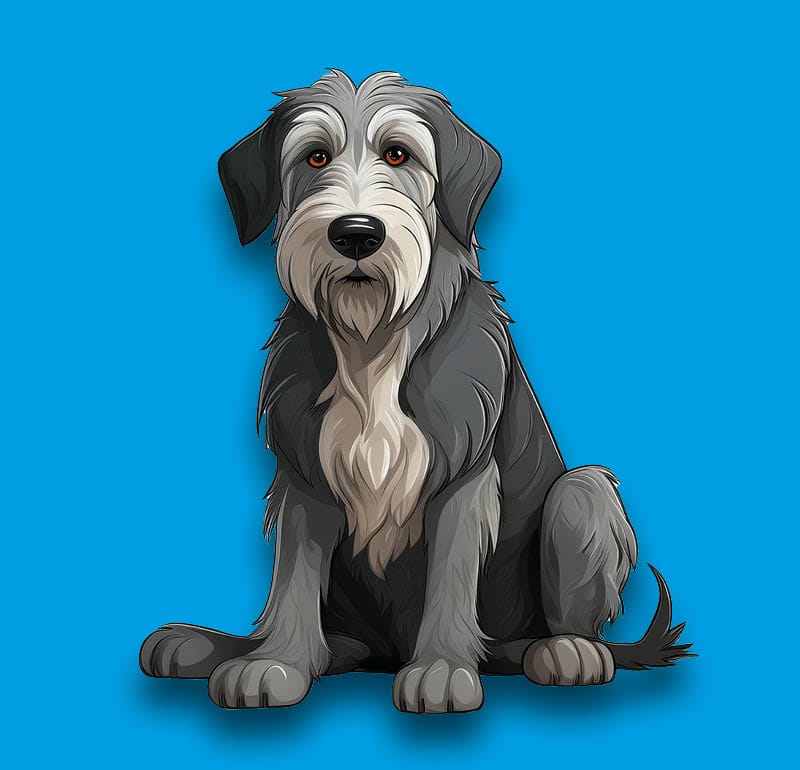

Irish Wolfhound

Gentle giant of the ancient world

Temperament

GentleLoyalPatientDignifiedCalm

Pros

  • Exceptionally gentle with children
  • Low aggression
  • Great with other dogs
  • Loyal companion

Cons

  • Short lifespan (6-8 years)
  • Very large - needs space
  • Expensive to feed
  • Prone to heart issues

Ancestry

Ancient Molossers40%
Ancient eastern sighthounds33%
Old hunting dogs of the Celts27%

Our best guess, not hard science. These figures come from history and old breeding records, our viewpoint, not proven fact.

PuppyAdolescentAdultSeniorAged02550751000246810Age (years)Function & Health

Cost to care

Just like owning a car or any other liability, upkeep and maintenance is required — and dog ownership is no different. Particular breeds need more attention from the vet, others have higher grooming costs, while others will eat you out of house and home. We have built this tool to help you understand what to expect from owning this breed.

Low MaintenanceSick as a dog
Typical expected scenario
Annual cost*
£3,009
Lifetime cost*
£30,090

* Projected figures based on breed-typical UK costs (2026). Individual dogs will vary.

The Lifespan Diagram

A visual guide to how this breed moves through life. The horizontal axis shows age from birth to old age; the vertical axis represents overall function, health and quality of life. The curve rises quickly through puppyhood, holds high during the prime adult years, then gradually declines into the senior stage. The exact shape varies by breed. This is a conceptual illustration, not a clinical or veterinary prediction for any individual dog.

Method & sources

The curve score is a conceptual illustration, not observed veterinary data. Published median lifespan informed the x-axis. The y-axis was generated by piecewise mathematical functions.

CELTICHOUND75%ANCIENTMOLOSSERS25%28%23%
Irish Wolfhound

A towering ancient hound bred to hunt wolves and guard halls, and one of the tallest dogs in the world. Tap a circle inside to keep digging.

Suitability

ChildrenOtherdogsCatsSmall home1st-timeownerTimealone
Children
Other dogs
Cats
Small home
1st-time owner
Time alone

Scores reflect typical breed traits. Individual dogs vary with upbringing and environment.

Exercise needs

60min/dayDaily average
🚶Moderate
Copes with rest days
1h
Mon
1h
Tue
1h
Wed
1h
Thu
1h
Fri
1h 6m
Sat
1h 6m
Sun

Irish Wolfhounds need daily walks but their large size means they tire more quickly than their frame suggests.

Typical breed guidelines. Individual dogs vary by age, health and temperament.

Grooming

Rough wiry coat
30minHome grooming per week
£0Professional groomingNot typically needed
Shedding
Moderate
Tools you will need
Pin brushSlicker brushStripping comb

Irish Wolfhound coats need regular brushing and occasional hand-stripping to keep the wiry texture. They are not heavy shedders.

Typical breed guidelines. Costs vary by location and coat condition.

Training

3out of 5EasyHard
Gentle but independent
  • Willing and gentle but not driven to work for their owner
  • Basic obedience comes readily -- advanced work requires patience
  • Motivated by affection and calm praise more than food
Excels atBasic obedience and therapy work where their gentle nature shines
Watch out forToo large for unruly habits to go unchecked -- start lead and recall training immediately

Typical breed traits. Individual dogs vary with socialisation and consistency of training.

Irish Wolfhound60%Celtic Hound👁55%Ancient easternsighthounds👁45%Old hunting dogsof the Celts👁40%AncientMolossers👁

Known health conditions

Irish Wolfhounds have one of the shortest lifespans of any breed. Heart disease and bone cancer are the leading causes of death and significantly affect the breed's average age at death.

ConditionSeverityLikelihood

This is a general guide based on published breed health surveys and veterinary literature. Not all dogs will develop these conditions. Always obtain health-tested parents from a responsible breeder and maintain regular vet check-ups.

Back