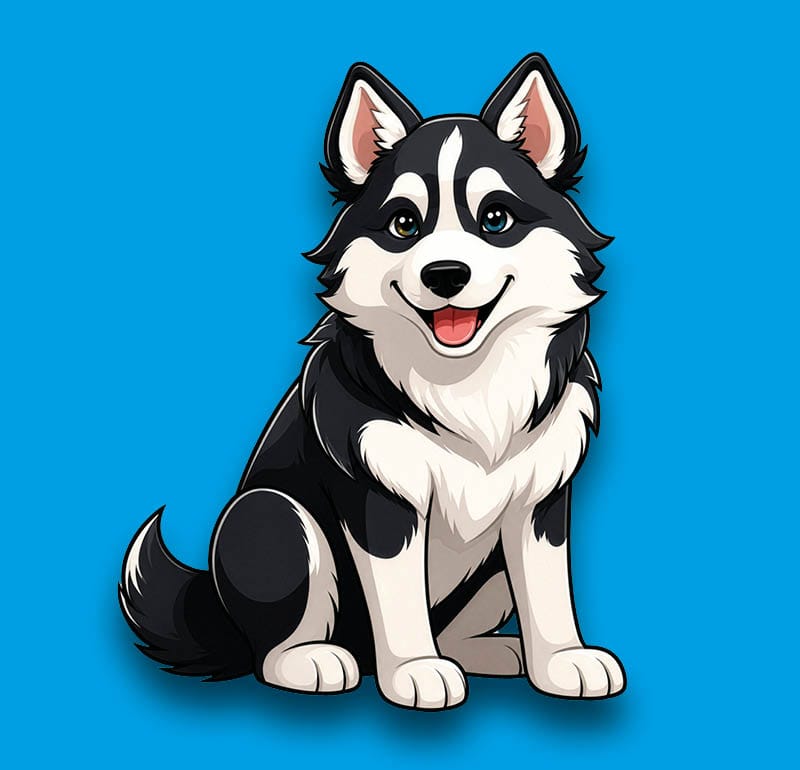

Siberian Husky

Born to run, impossible to contain

Temperament

OutgoingMischievousLoyalGentleAlert

Pros

  • Friendly with everyone
  • Stunning looks
  • Good with other dogs
  • Energetic companion

Cons

  • Escapes constantly
  • Extremely high exercise needs
  • Heavy shedding
  • Howls loudly
  • Not a guard dog

Ancestry

Chukchi sled dogs75%
Ancient Arctic spitz25%

Our best guess, not hard science. These figures come from history and old breeding records, our viewpoint, not proven fact.

PuppyAdolescentAdultSeniorAged0255075100024681012Age (years)Function & Health

Cost to care

Just like owning a car or any other liability, upkeep and maintenance is required — and dog ownership is no different. Particular breeds need more attention from the vet, others have higher grooming costs, while others will eat you out of house and home. We have built this tool to help you understand what to expect from owning this breed.

Low MaintenanceSick as a dog
Typical expected scenario
Annual cost*
£2,046
Lifetime cost*
£24,552

* Projected figures based on breed-typical UK costs (2026). Individual dogs will vary.

The Lifespan Diagram

A visual guide to how this breed moves through life. The horizontal axis shows age from birth to old age; the vertical axis represents overall function, health and quality of life. The curve rises quickly through puppyhood, holds high during the prime adult years, then gradually declines into the senior stage. The exact shape varies by breed. This is a conceptual illustration, not a clinical or veterinary prediction for any individual dog.

Method & sources

The curve score is a conceptual illustration, not observed veterinary data. Published median lifespan informed the x-axis. The y-axis was generated by piecewise mathematical functions.

CHUKCHISLED DOGS75%ANCIENTARCTIC SPITZ25%
Siberian Husky

The sled dog of the Chukchi people of north east Siberia, bred to pull light loads vast distances in brutal cold. Tap a circle inside to keep digging.

Suitability

ChildrenOtherdogsCatsSmall home1st-timeownerTimealone
Children
Other dogs
Cats
Small home
1st-time owner
Time alone

Scores reflect typical breed traits. Individual dogs vary with upbringing and environment.

Exercise needs

120min/dayDaily average
High output
Copes with rest days
2h
Mon
2h
Tue
2h
Wed
2h
Thu
2h
Fri
2h 36m
Sat
2h 36m
Sun

Huskies are born to run. Without significant daily exercise they will escape, howl or destroy the home.

Typical breed guidelines. Individual dogs vary by age, health and temperament.

Grooming

Thick double coat
40minHome grooming per week
£0Professional groomingNot typically needed
Shedding
Very heavy
Tools you will need
Slicker brushUndercoat rakeDeshedding tool

Huskies blow their coat twice a year in impressive quantities. Daily brushing during these periods is essential.

Typical breed guidelines. Costs vary by location and coat condition.

Training

4out of 5EasyHard
Independent minded
  • Intelligent but bred to make their own decisions on the trail
  • Recall is notoriously unreliable without very early training
  • Gets bored quickly with repetitive obedience drills
Excels atCanicross, skijoring, and activities that use their natural drive
Watch out forNever rely on off-lead recall in an unsecured area -- strong prey drive

Typical breed traits. Individual dogs vary with socialisation and consistency of training.

Siberian Husky75%Chukchi sleddogs👁25%Ancient Arcticspitz👁

Known health conditions

Siberian Huskies are one of the healthier breeds overall but do have inherited eye conditions and hip dysplasia in their lineage. Health testing of breeding stock is recommended.

ConditionSeverityLikelihood

This is a general guide based on published breed health surveys and veterinary literature. Not all dogs will develop these conditions. Always obtain health-tested parents from a responsible breeder and maintain regular vet check-ups.

Back