


Ancient Times
In ancient times, Britain was not an island. It was connected to mainland Europe by Doggerland. But we are sorry to report that Doggerland has nothing to do with dogs! It is named after the Dogger Bank in the North Sea, which got its name from doggers, the medieval Dutch fishing boats that sailed there to catch cod.
Britain's First Dogs
Bones and ancient DNA tell us when dogs first padded across Britain. This is what archaeologists have found so far.
- 14,300 years ago
Gough's Cave, Somerset
A jawbone from Gough's Cave in Cheddar Gorge was tested by the Natural History Museum and proved to be a dog, not a wolf. It is the oldest dog yet found in Britain. It lived with Ice Age hunters, and its remains seem to have been handled after death in similar ways to the human remains found in the cave.
- About 11,000 years ago
Star Carr, North Yorkshire
At a lakeside hunting camp near Scarborough, archaeologists found a dog's skull and leg bones. Doggerland still joined Britain to Europe, so people and their dogs could walk here.
- About 8,000 years ago
Britain becomes an island
Rising seas drowned the last of the land bridge. From then on, any new dogs had to arrive by boat.
- About 5,000 years ago
Farmers' dogs reach Scotland
DNA from dogs at Neolithic sites in Orkney and Caithness shows that about a quarter of their ancestry came from dogs brought by incoming farmers. The rest came from Britain's older hunter-gatherer dogs.
- About 5,000 to 3,500 years ago
Stonehenge, Wiltshire
Work on Stonehenge began around 3000 BC and carried on until around 1520 BC. That is nearly 1,500 years of building, so the people who finished it lived about 60 generations after the people who started it.
Sources: Natural History Museum (2026); Nature (2026): dogs in Palaeolithic western Eurasia; Nature (2026): genomic history of early dogs in Europe; Degerbøl (1961): the Star Carr dog.
Did you know?
Britain's earliest dogs had no breed standards or pedigrees.
They were shaped by the jobs people needed doing: guarding homes and livestock, following scents, chasing deer and hares.
Classical writers recorded that British hunting dogs were exported overseas, and reported on Celts using dogs in war.
A 14,000-year-old dog jawbone
Archaeologists have found dogs of very different sizes in early British settlements, from small animals to dogs approaching wolf size.
The dogs at Star Carr in North Yorkshire, around 11,000 years ago, stood between 52 and 61 cm at the shoulder, about the height of a modern Labrador.
Several generations later
The Roman writer Arrian described swift Celtic coursing hounds that hunted by sight rather than scent.
These early dogs were types shaped by their work and environments.
There were all kinds of dogs, from fast coursing hounds to powerful guard dogs and small practical workers.
Their names, appearance and purpose could change from place to place and one century to the next.
Ancient Dogs
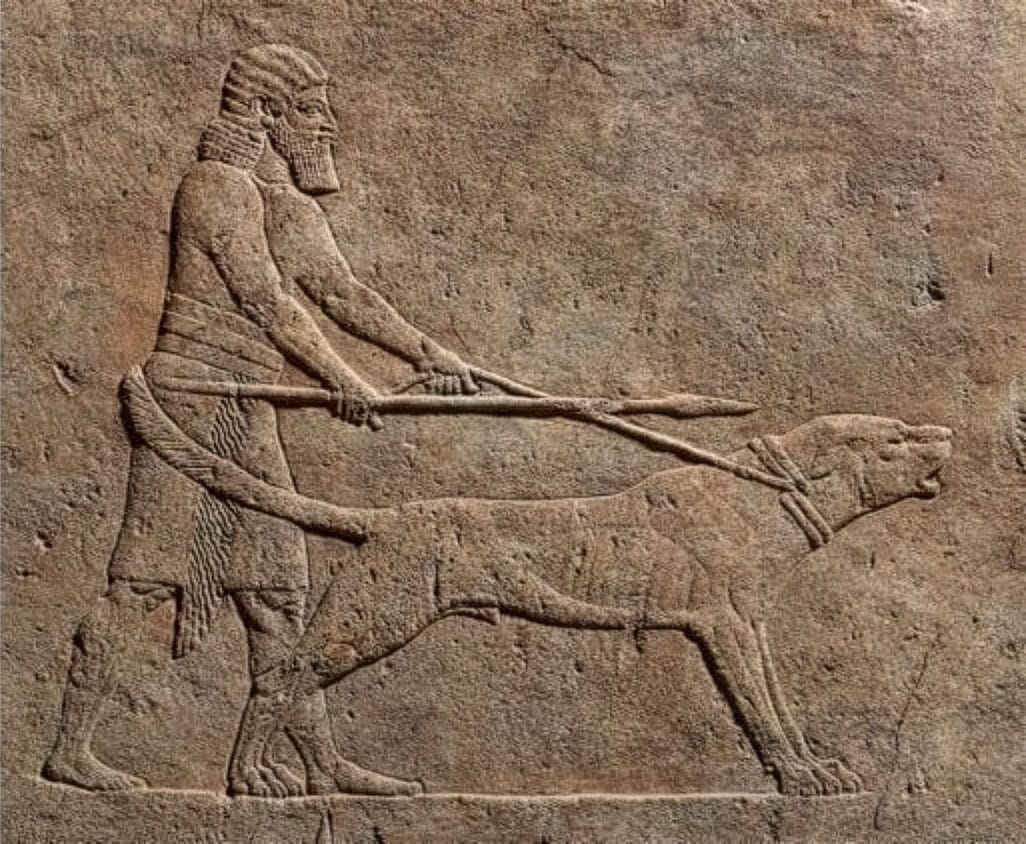
Britain's earliest dogs had no breed standards or pedigrees. They were shaped by the jobs people needed doing: guarding homes and livestock, following scents, chasing deer and hares. Classical writers noticed. Strabo recorded British hunting dogs exported overseas, and Celts reportedly used dogs in war.
Several generations later, the Roman writer Arrian described swift Celtic coursing hounds that hunted by sight rather than scent. These early dogs were types shaped by work and place rather than standardised breeds: the same island held fast coursing hounds, powerful guard dogs and small practical workers, and their names, appearance and purpose could change between regions and centuries.
- Swift Celtic hounds and greyhound-like dogs pursued deer, hares and other fast-moving game by sight.
- Early tracking hounds followed game by scent, the deep root of Britain's later scent-hound families.
- Protected people, livestock and property, and helped control cattle. Roman-period evidence shows dogs chasing vermin from buildings.
- Hunting with carefully trained hounds signalled wealth, while ordinary households kept practical working dogs.
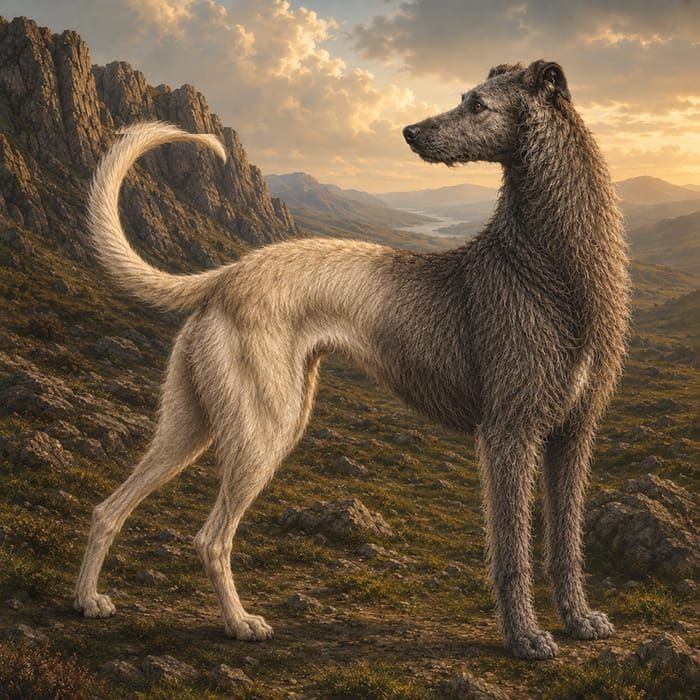
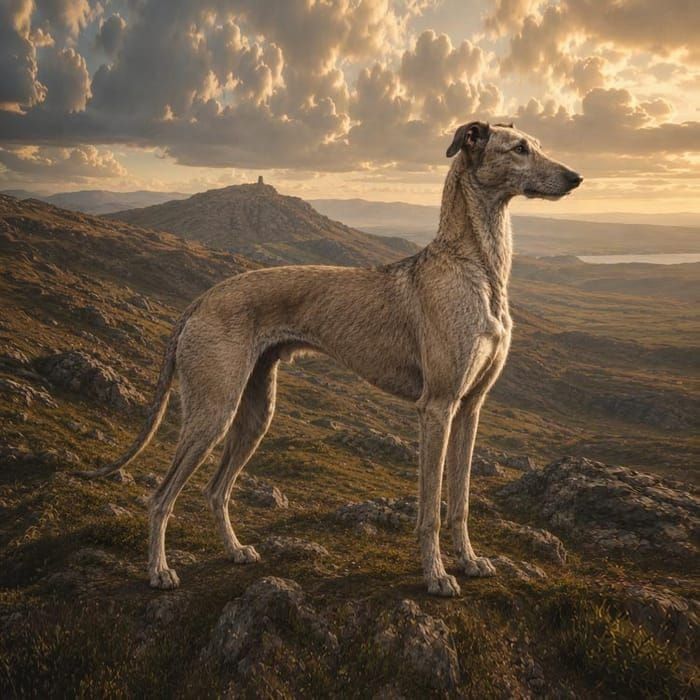
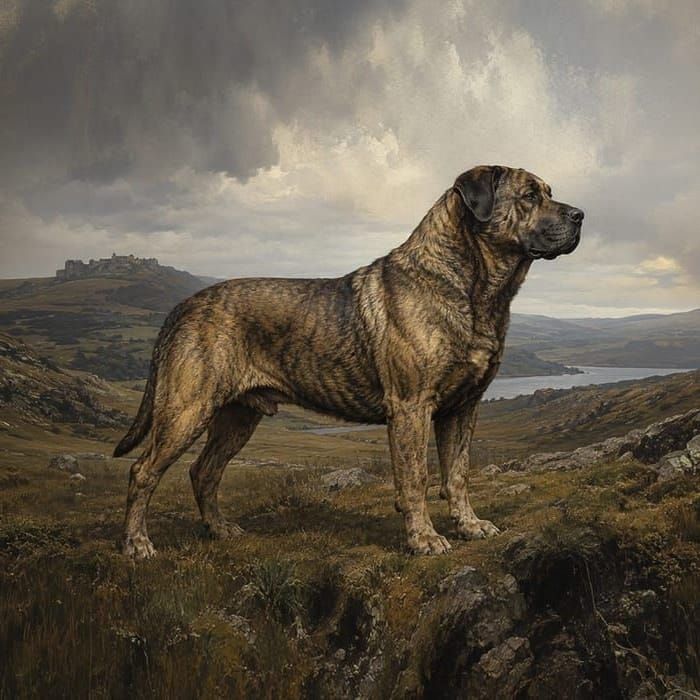
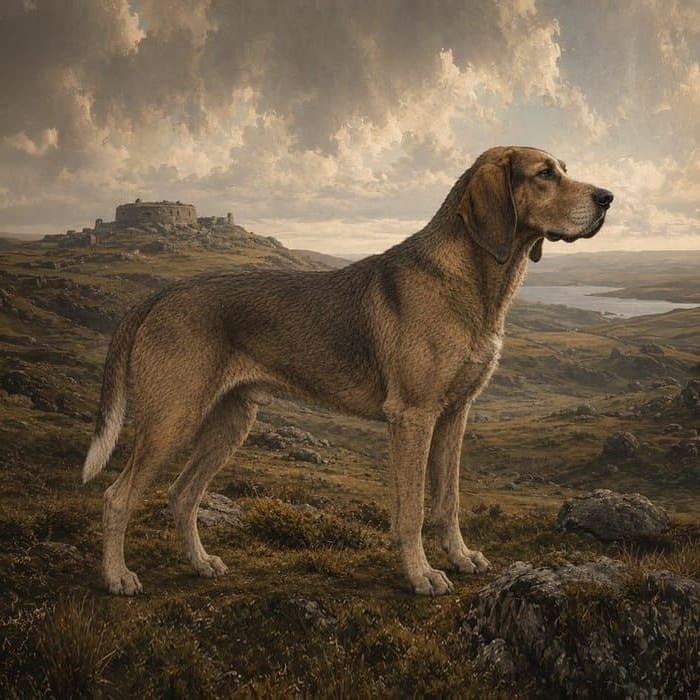
Britain's first dogs arrived on foot, across the land bridge that is now the North Sea. They were not breeds as we understand the word, but types shaped by work: coursing hounds that hunted by sight, scent hounds that followed a trail, and heavy dogs that guarded homes and livestock. Roman writers knew them well enough to export them. The Celtic Hound, the Ancient Mastiff and the Celtic Coursing Hound all belong to this period.