


Britain's dog history
We are a nation of dog lovers now, but it was not always so. For much of history Britain's dogs were worked hard, taxed, banned from the streets and even maimed under harsh forest laws. This is the story of how they went from tools and outcasts to the treasured companions ruling our sofas today.
Ancient Dogs
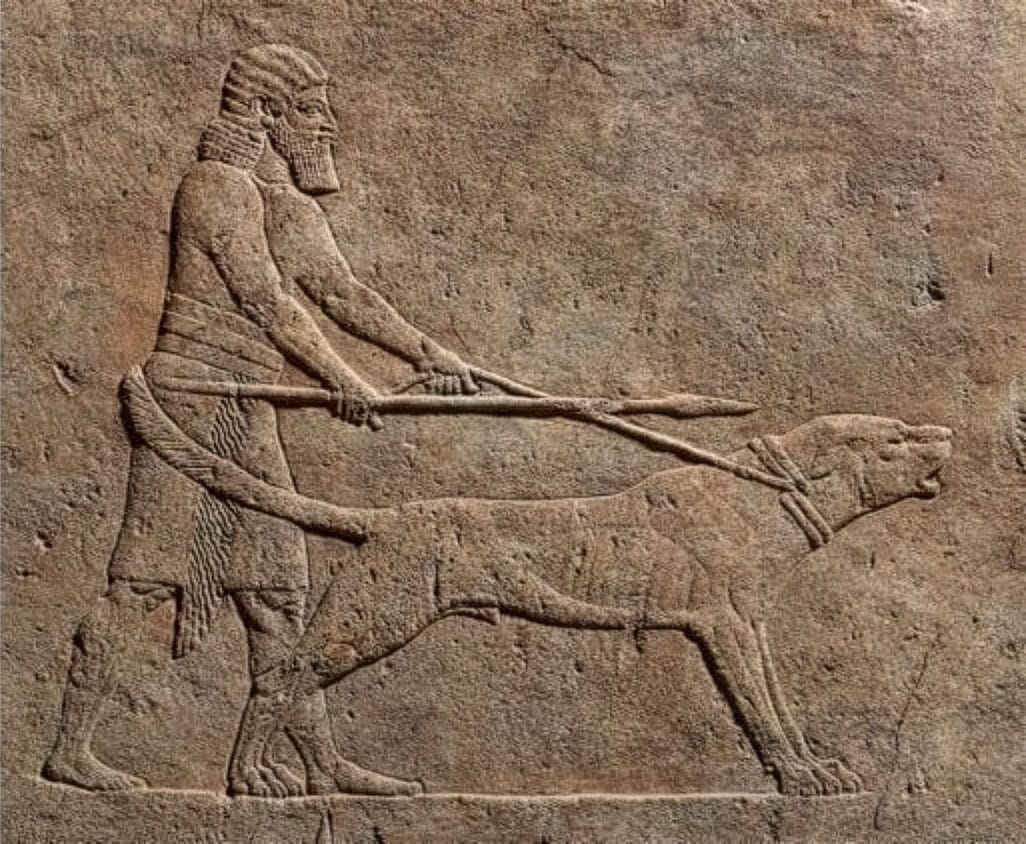
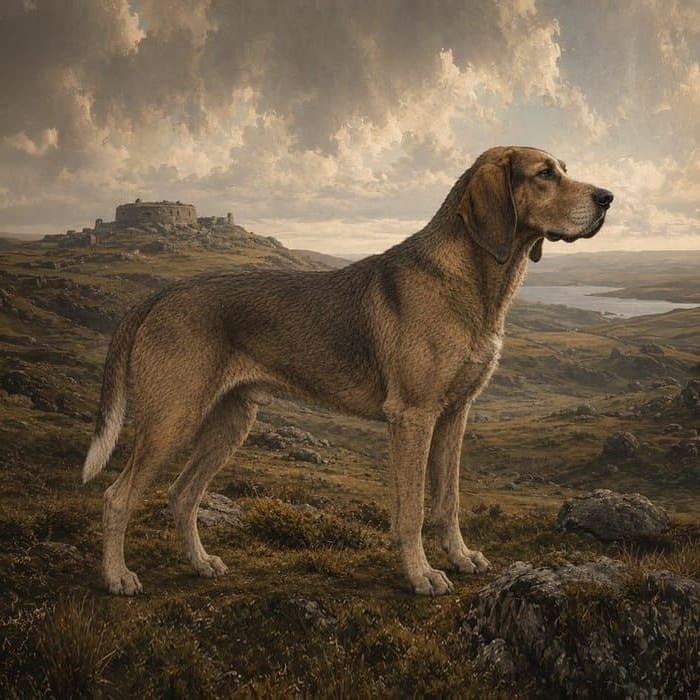
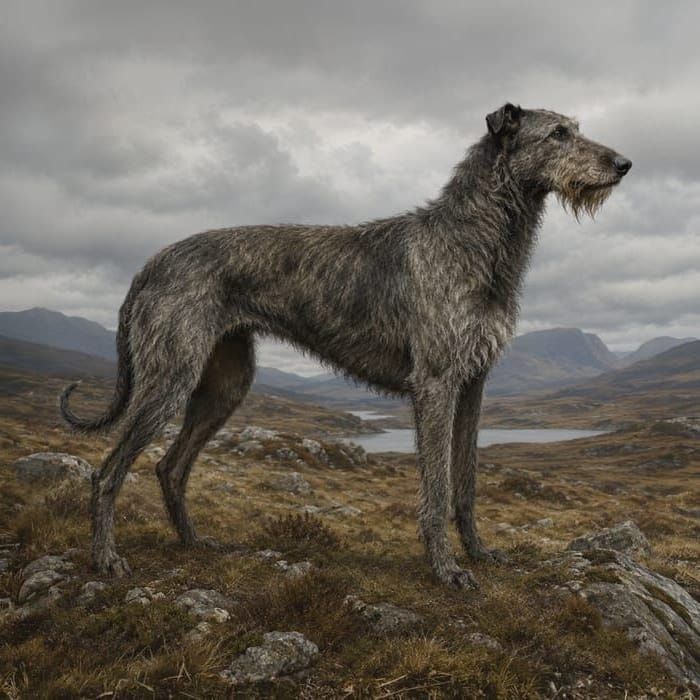
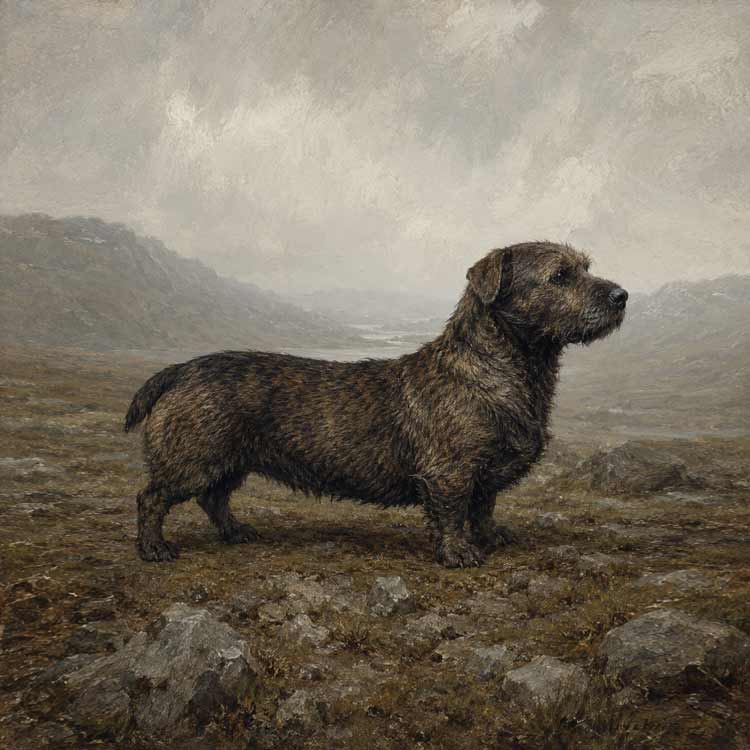
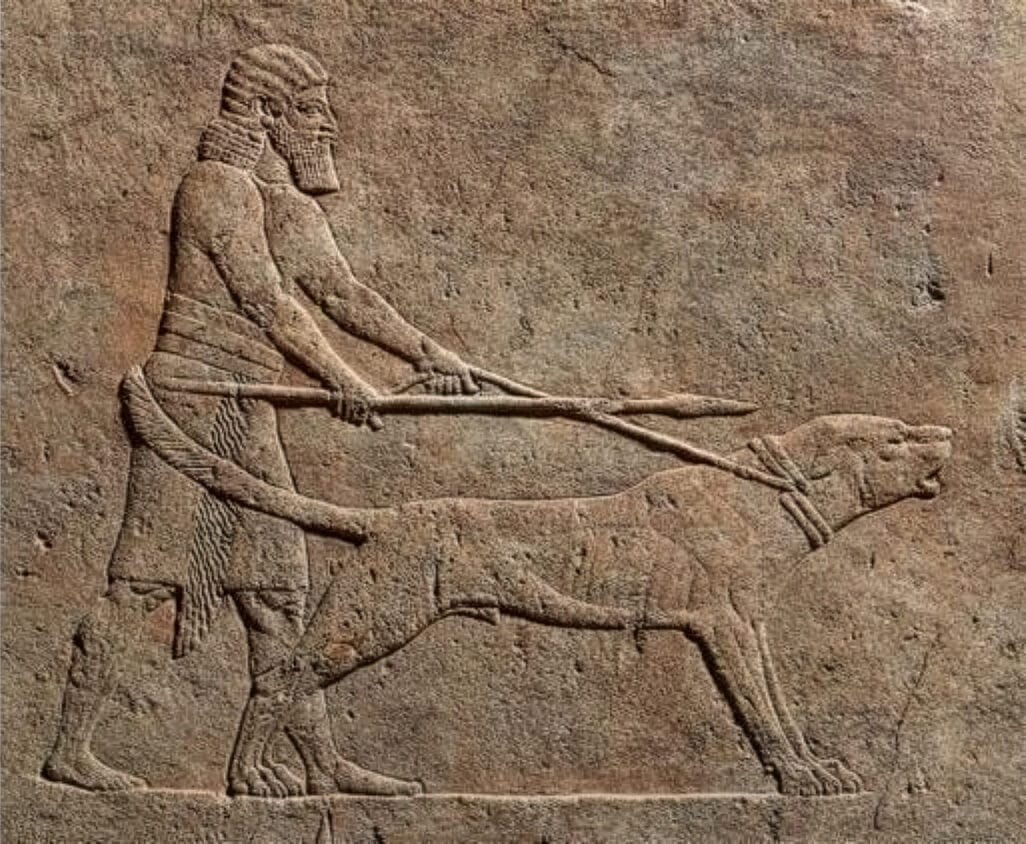
Britain's earliest dogs had no breed standards or pedigrees. They were shaped by the jobs people needed doing: guarding homes and livestock, following scents, chasing deer and hares. Classical writers noticed. Strabo recorded British hunting dogs exported overseas, and Celts reportedly used dogs in war.
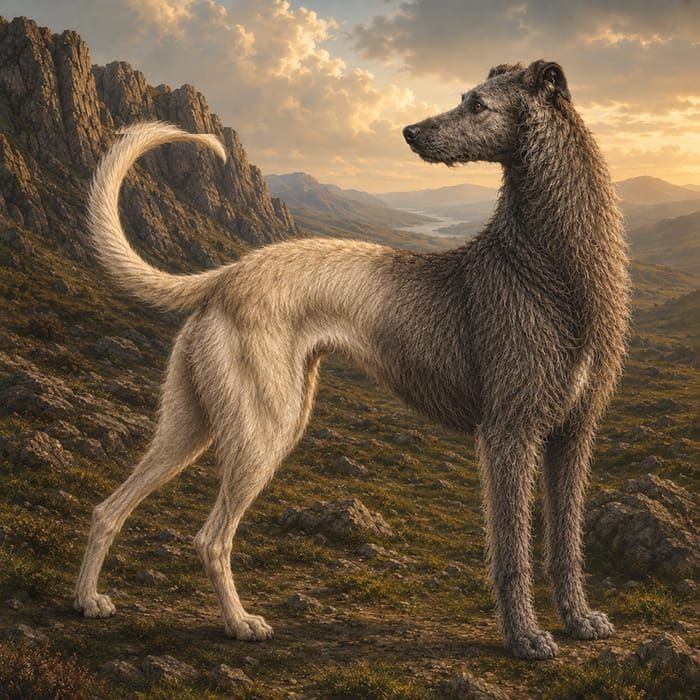
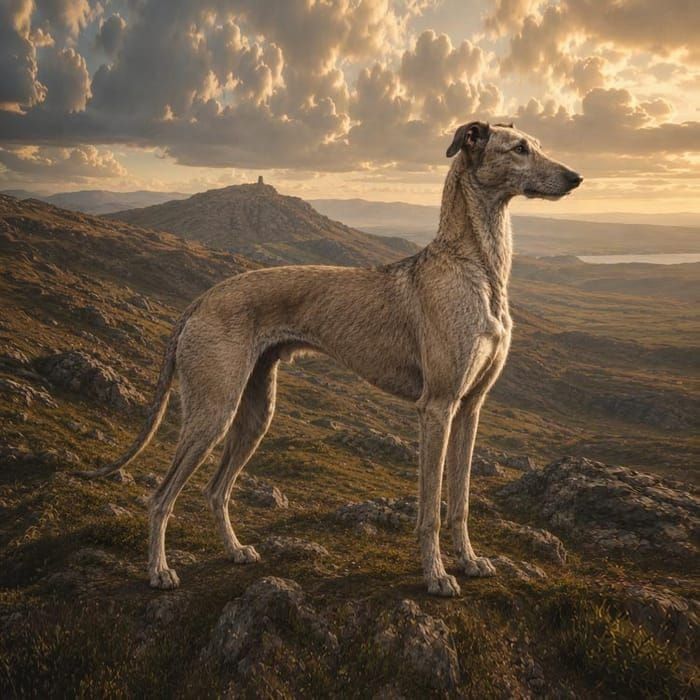
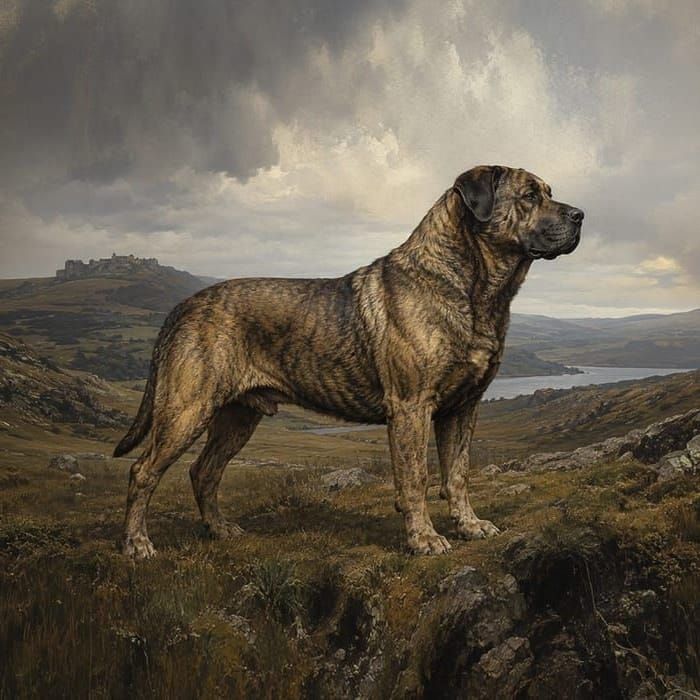
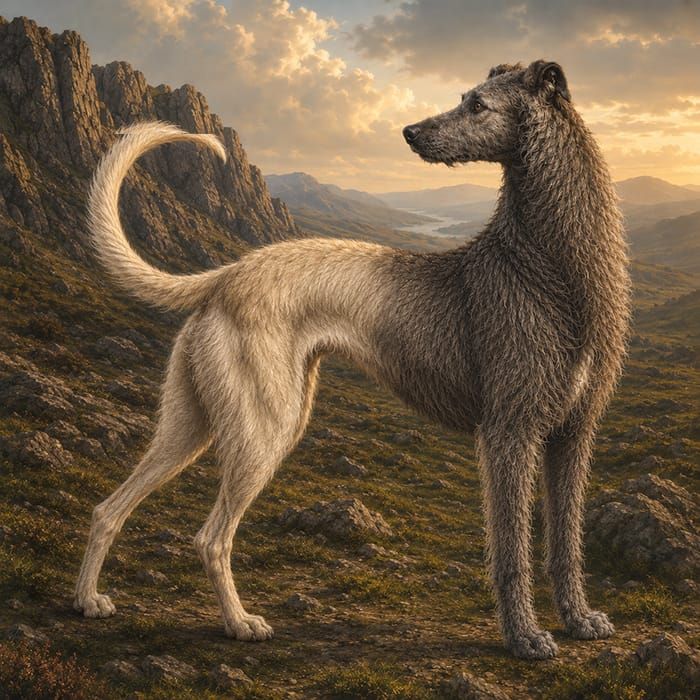
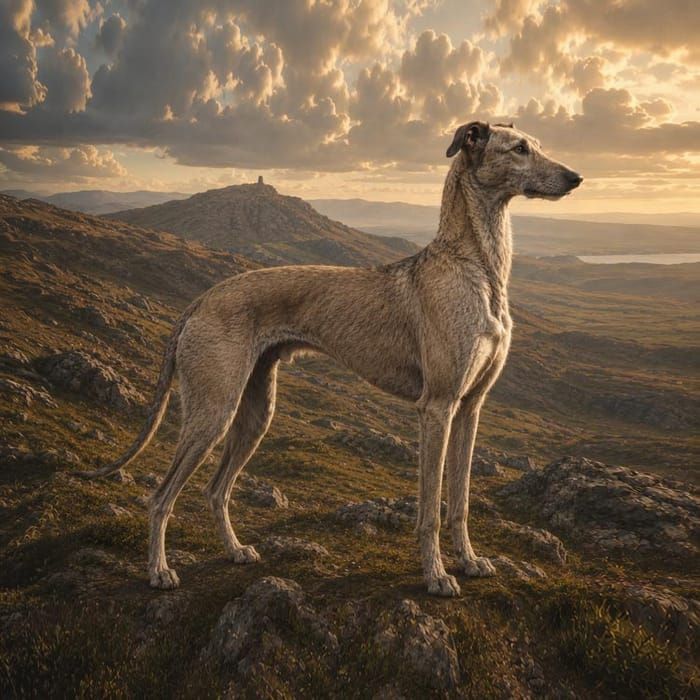
Several generations later, the Roman writer Arrian described swift Celtic coursing hounds that hunted by sight rather than scent. These early dogs were types shaped by work and place rather than standardised breeds: the same island held fast coursing hounds, powerful guard dogs and small practical workers, and their names, appearance and purpose could change between regions and centuries.
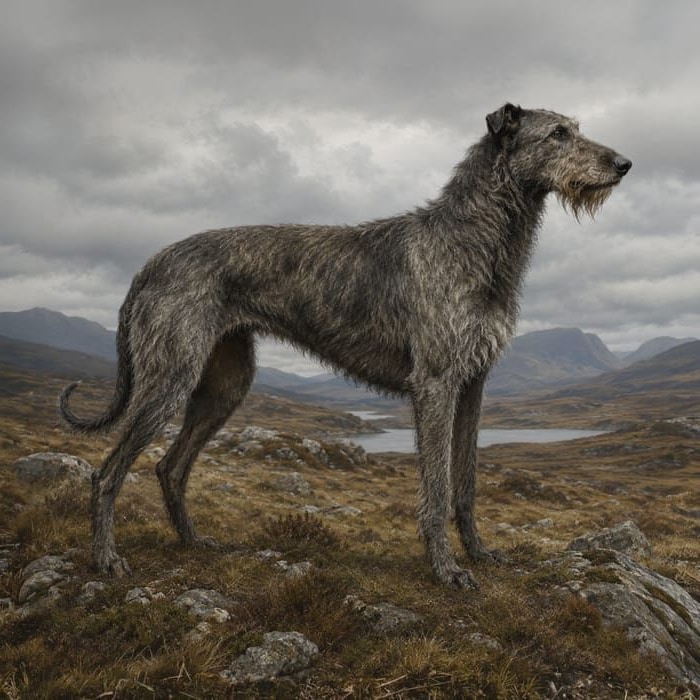
Learn more: Ancient Times- Swift Celtic hounds and greyhound-like dogs pursued deer, hares and other fast-moving game by sight.
- Early tracking hounds followed game by scent, the deep root of Britain's later scent-hound families.
- Protected people, livestock and property, and helped control cattle. Roman-period evidence shows dogs chasing vermin from buildings.
- Hunting with carefully trained hounds signalled wealth, while ordinary households kept practical working dogs.
Saxon and Norman Dogs
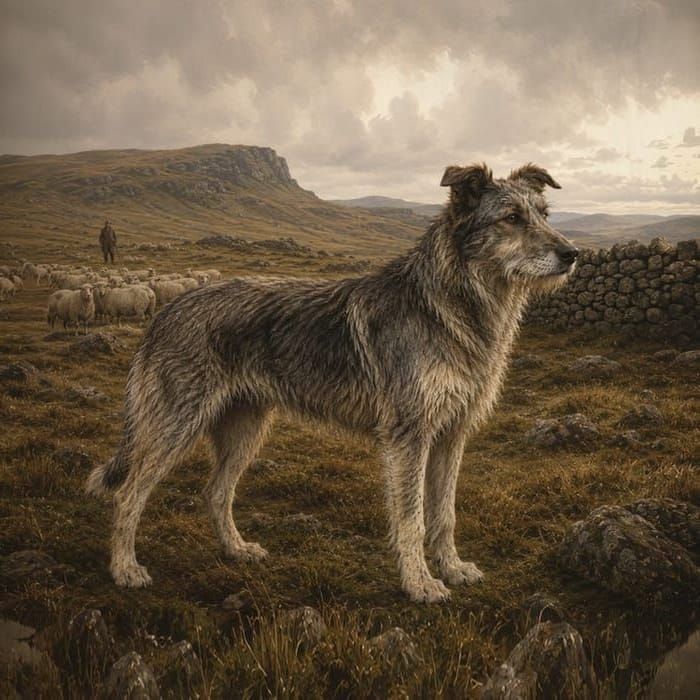
Between the Romans leaving and the Normans arriving, Britain was settled again and again. Saxon farmers, Norse settlers and Norman lords all brought dogs, and the dogs did what the new owners needed: herding, guarding, driving stock to market and hunting.
Dogs in these centuries were valued by what they could do, not by how they looked. A farm dog that moved cattle, a watchdog that barked at strangers and a hound that could follow a trail were worth real money, and the law said so. After 1066 the Norman kings made hunting a royal privilege, which turned some dogs into prized possessions and left others on the wrong side of the forest laws.
Learn more: Saxons 'n' Normans- Saxon farms kept sturdy herding and guard dogs, the stock behind Britain's later collies.
- Norse settlers brought their own working dogs into the north and east.
- Norman lords brought hunting hounds and the laws that reserved the deer for themselves.
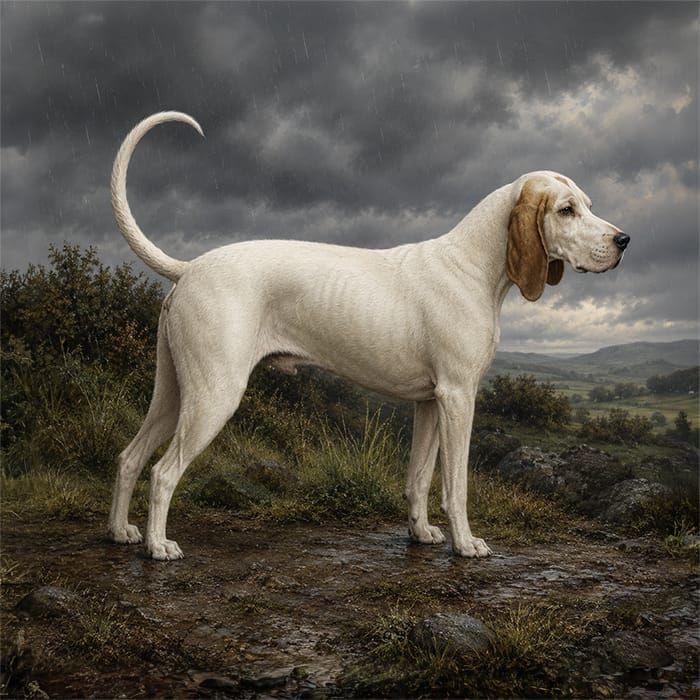
- The scent hound rises: the Talbot and the Rache are named in this period.
Medieval Dogs
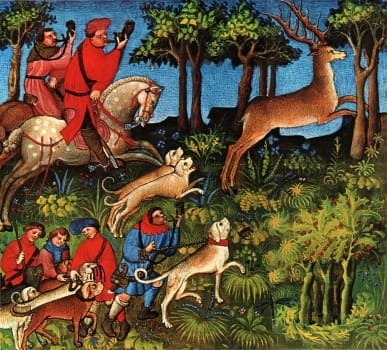
Medieval Britain ran on working dogs. Great households kept organised packs of hounds for the hunt, drovers walked cattle to market with tough farm dogs at their heels, and shepherds relied on quick, biddable herders. A dog's name described its job rather than its breed, and the law took dogs seriously enough to regulate them.
By the Middle Ages Britain's dogs had settled into recognisable working kinds. Hunting treatises described each type and its task, household records listed hounds by the work they did, and forest law regulated which dogs could live near the royal deer. These were still types rather than breeds: a talbot or a rache was a job and a look, not a pedigree, and the same name could cover different dogs in different counties.
Norman kings set aside up to a third of England as royal forest, where only the king could hunt, and the forest laws became some of the most resented in medieval England: even a harmless guard dog could be lamed simply for living near royal land. The law valued dogs by their work, too, with a shepherd's dog, a guard dog and a hunting hound each worth a different sum.
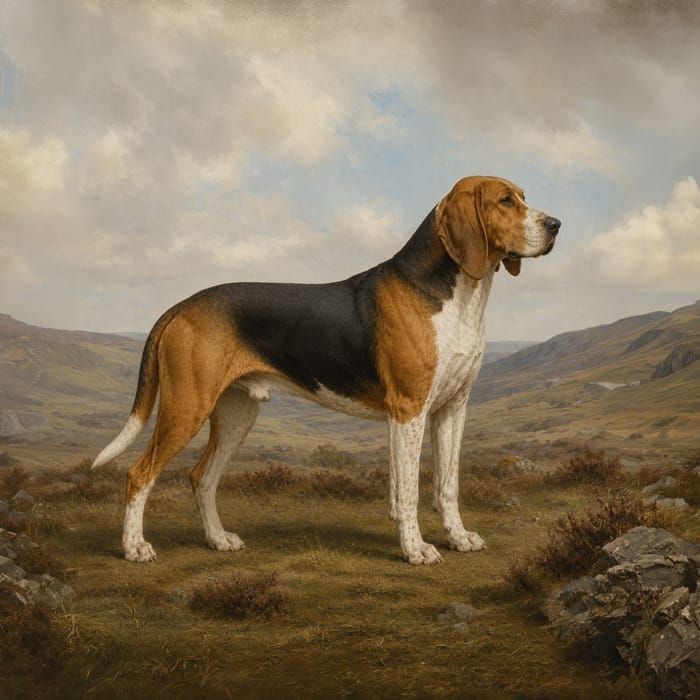
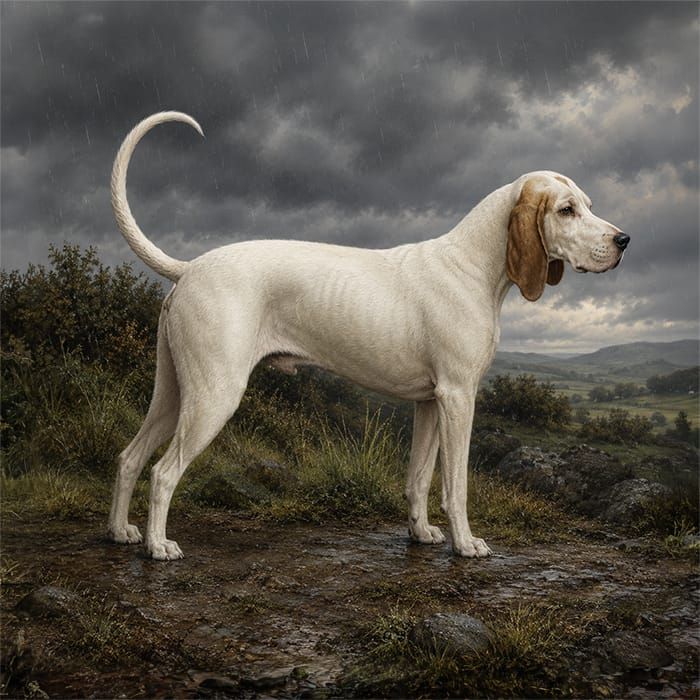
Learn more: Medieval Times- Medieval scent hounds followed an animal's trail by nose, sometimes working together in organised packs.
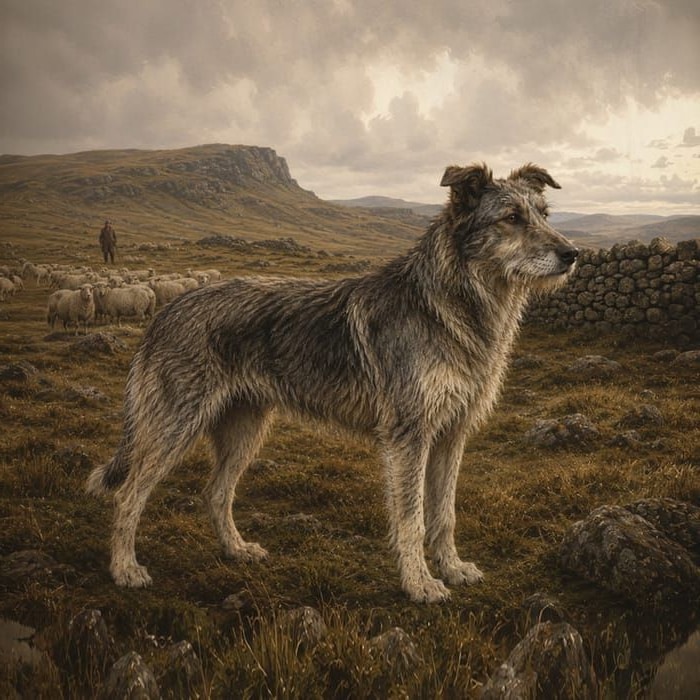
- Shepherds' and drovers' dogs moved sheep and cattle across the hills and along the long drove roads to market.
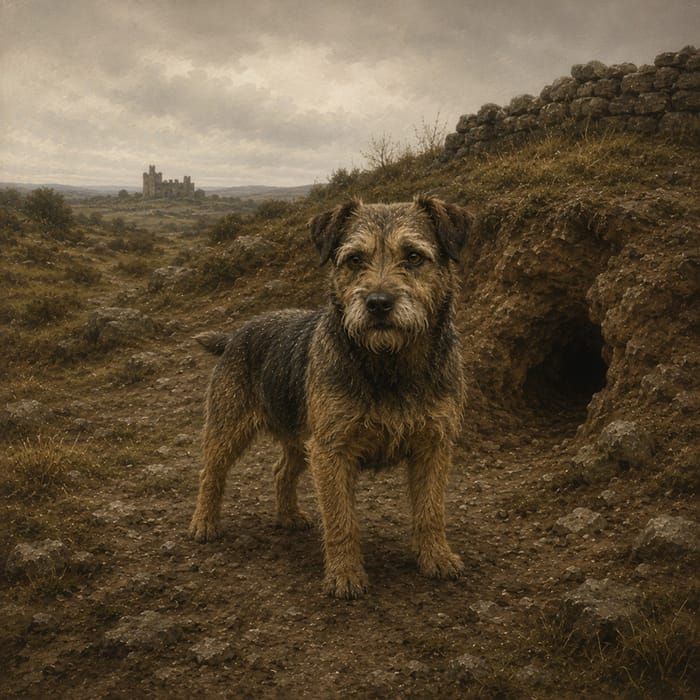
- Small, determined earth dogs followed fox and badger underground, the working root of Britain's terriers.
- The organised hunt gave hounds their names and their jobs, from the rache that ran by scent to the greyhound slipped from its lead.
Tudor 'n' Stuart Britain
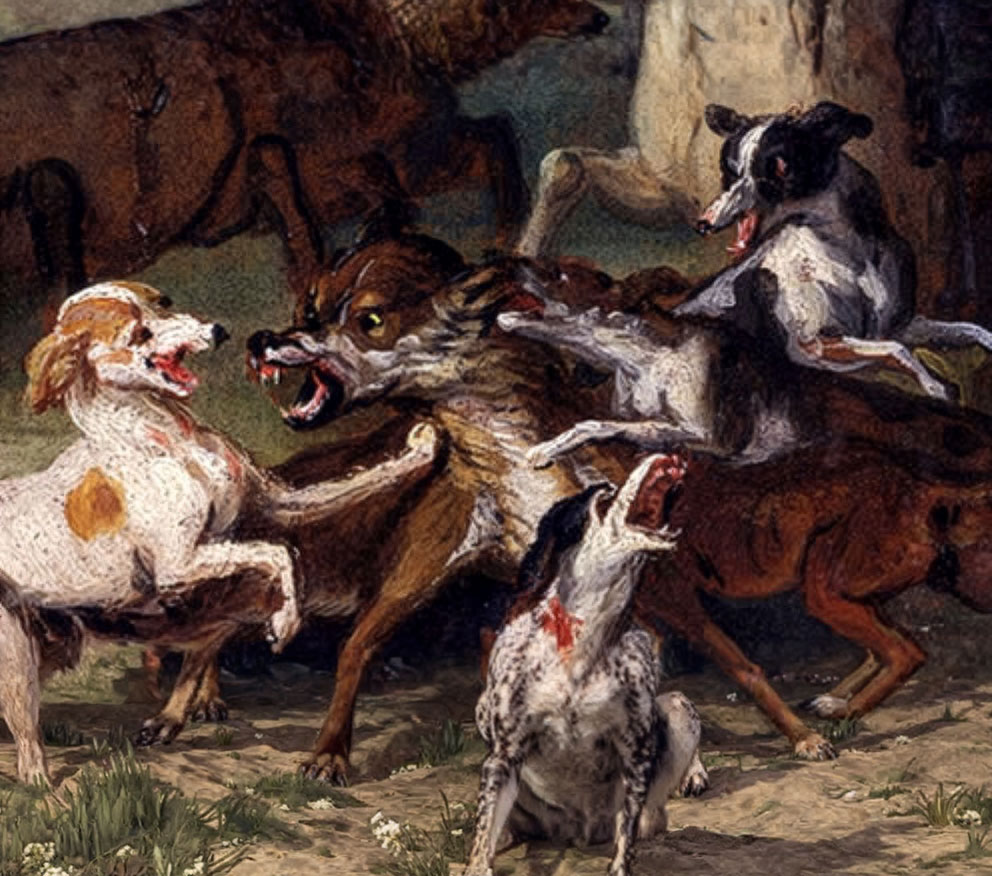
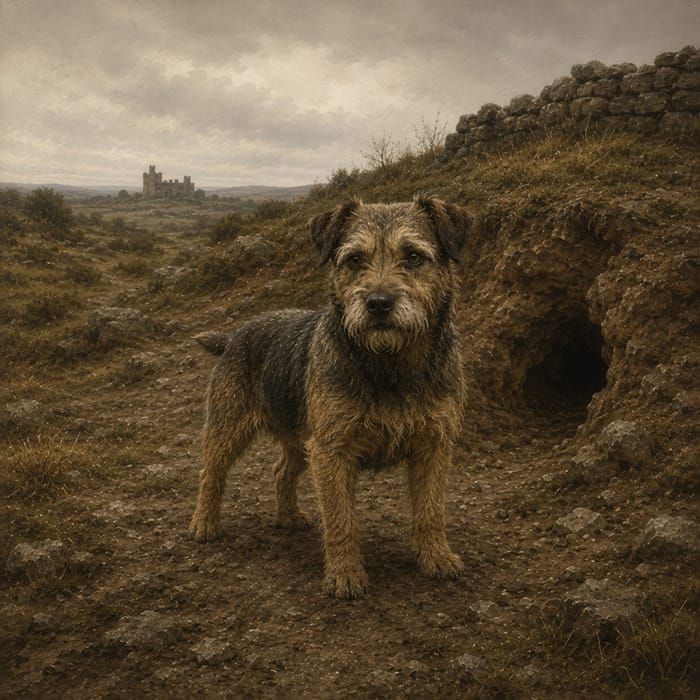
In the 1500s and 1600s, dogs moved into the heart of the household. At the royal court they were pampered companions, while in towns and villages they turned kitchen spits, guarded yards and even followed their owners to church.
At the Tudor court, Henry VIII's pampered lapdogs wore velvet collars stamped with the gold Tudor rose, and Anne Boleyn doted on a little dog named Purkoy. A century later the Stuart kings were just as devoted: Charles II was rarely seen without his little spaniels, which still carry his name as the King Charles Spaniel. The dog as a treasured companion, not just a working animal, was taking shape.
Learn more: Tudor 'n' Stuart Times- In 1576 John Caius's Of Englishe Dogges became the first book about dogs in the English language, sorting them into noble, rustic and degenerate kinds.
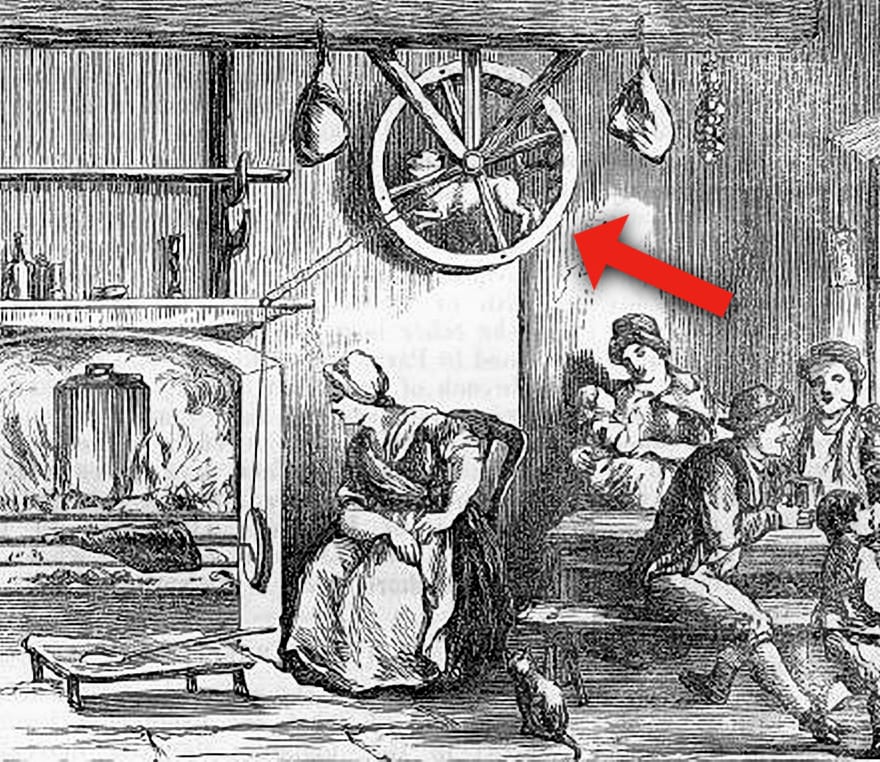
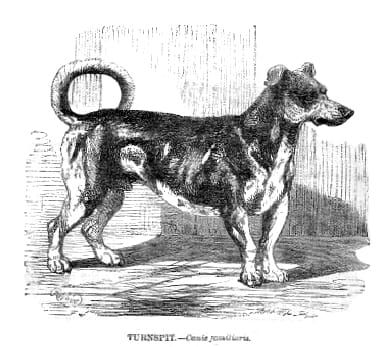
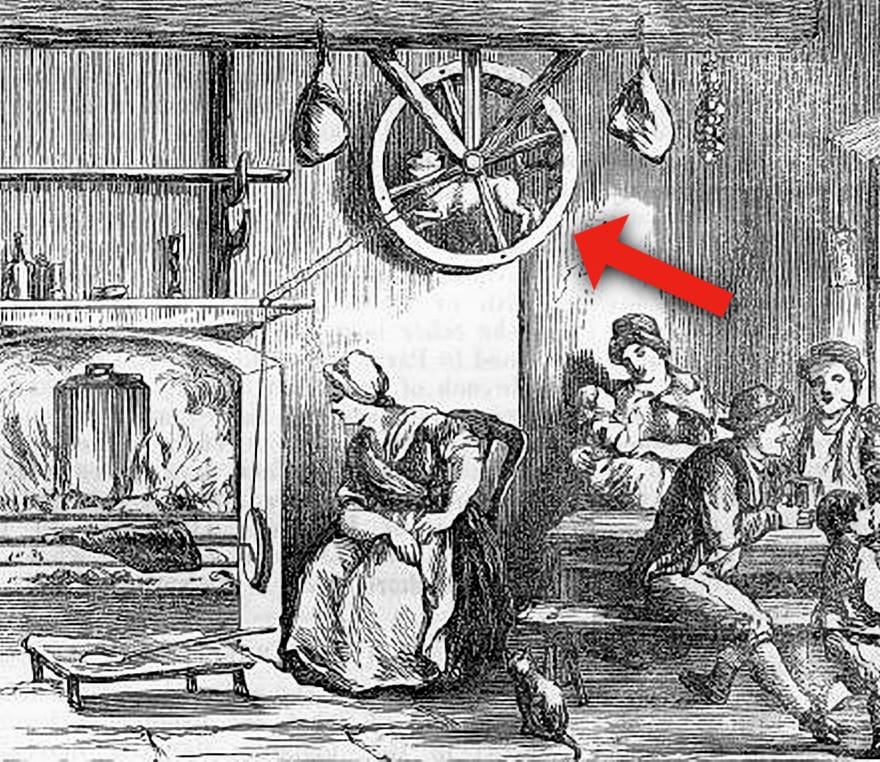
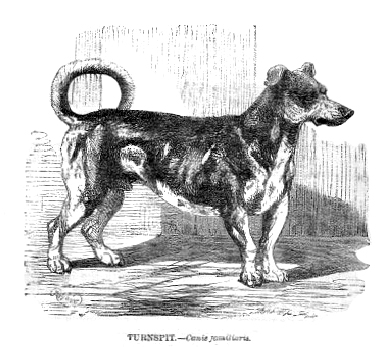
- Short-legged turnspit dogs ran inside wooden wheels in kitchens to turn the roasting meat, a job Caius recorded by name.
- By Tudor times, Henry VIII kept spaniels, beagles and greyhounds, and owned sixty-five dog leashes.
- Ladies of the court adored their little lapdogs, which they fondly called 'comforters'.
Working roots
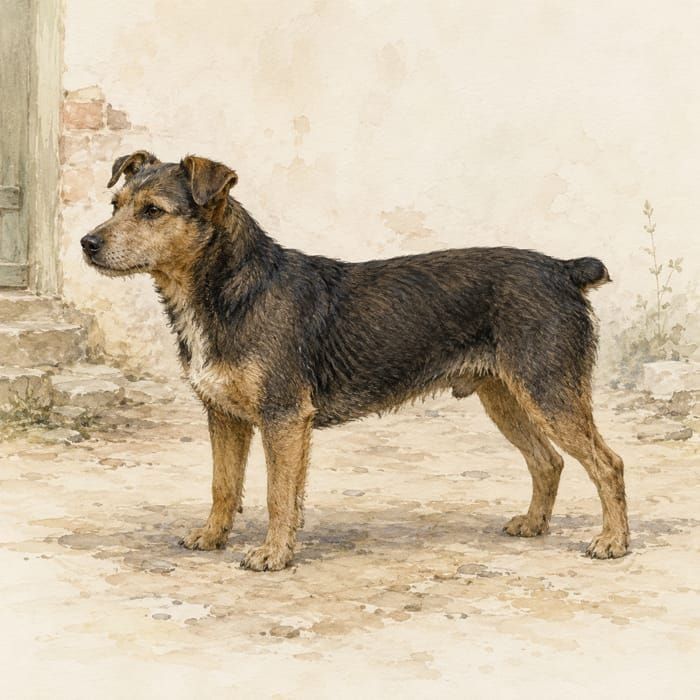
Long before dogs curled up by the fire, they worked for a living. Across Britain, breeds were shaped by the jobs they were needed to do, and you can still see those jobs written into their bodies and behaviour today.
A dog's looks are rarely an accident. The Collie's tireless energy, the terrier's boldness, the sighthound's lean frame: each was honed for a purpose over many generations. Understanding that working past is the key to understanding why breeds behave the way they do, a thread that runs right through the pack.
Learn more: The 1700s- Herding breeds like the Border Collie were bred to gather and move livestock across the hills.
- Terriers were developed to hunt vermin, going to ground after rats, mice and foxes.
- Sighthounds such as the Greyhound and Whippet were built for speed and the chase.
- Guarding and droving breeds protected homes and moved cattle to market.
Dogs in London
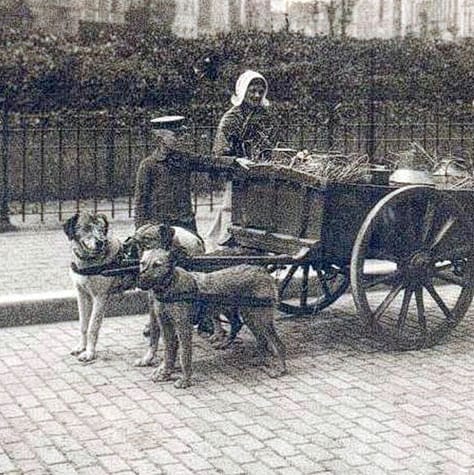
In the bustling streets of Victorian London, dogs were not just companions, they were engines of trade. For decades, teams of dogs hauled carts of goods through the capital, until the law stepped in.
The ban was meant to spare dogs from cruelty and to stop carts spooking horses in crowded streets, but it had a heartbreaking side. With the dogs no longer able to earn their keep, many traders could not afford to feed them, and thousands of working dogs were lost. It was a grim chapter, yet it pushed Britain toward treating dogs as animals deserving of protection.
Learn more: The 1800s- Working dogs pulled small carts of milk, bread, fish and other goods for street traders.
- The Metropolitan Police Act of 1839 banned dog-drawn carts within 15 miles of Charing Cross.
- A national ban on the public highways followed in 1854.
- The campaign against dog-carts helped shape Britain's early animal-welfare laws.
The Victorian turning point
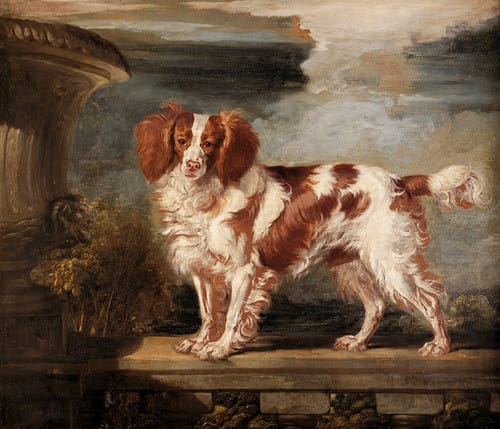
If one era turned the British dog from worker to companion, it is the Victorian age. In just a few decades, dogs moved from the farmyard into the drawing room, and modern pet keeping was born.
Victoria's very public affection for her dogs helped make pet keeping fashionable across society. As the middle classes grew, a well-bred dog became a mark of taste and gentility. The first dog show, the founding of Battersea and the arrival of the Kennel Club all came within a single generation, the moment dogs became companions to be celebrated rather than simply animals to be used.
Learn more: The 1800s- Queen Victoria was a devoted dog lover who owned more than eighty dogs across her lifetime.
- Her childhood companion was a Cavalier King Charles Spaniel named Dash, painted by royal artists.
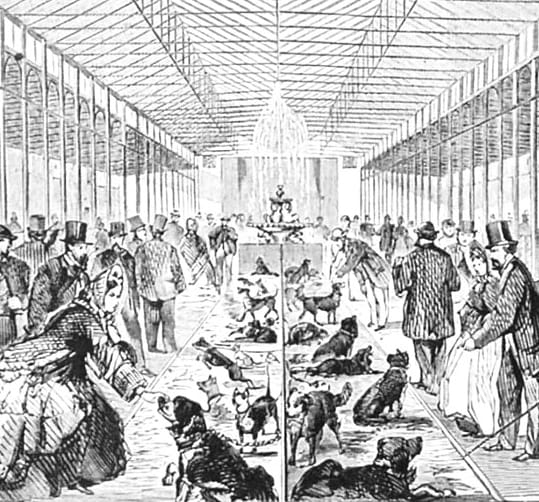
- Britain held the world's first organised dog show in Newcastle in 1859.
- Battersea Dogs Home opened in 1860 and the Kennel Club followed in 1873.
Dogs in popular culture
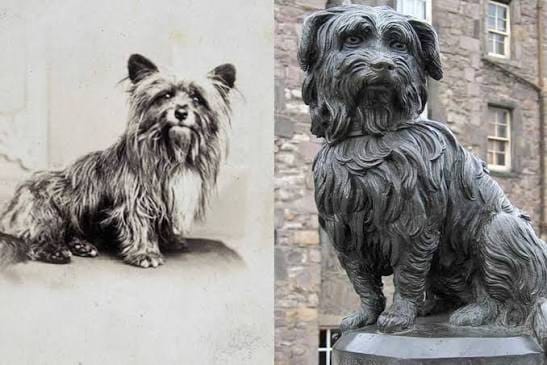
Some dogs become more than pets, they become legends. No British dog story is more beloved than that of Greyfriars Bobby, the little terrier whose loyalty captured a nation's heart.
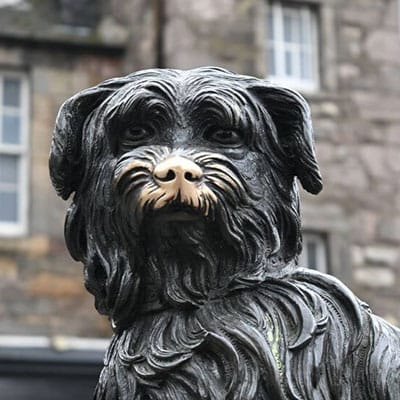
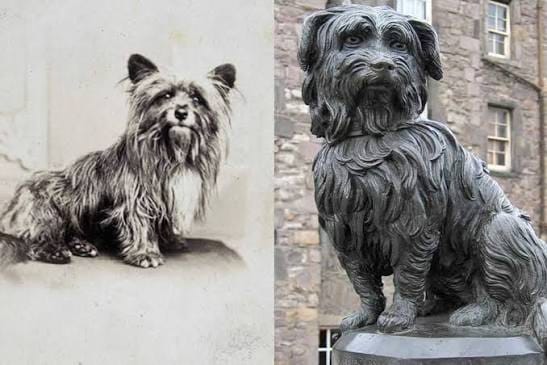
Historians gently point out that the tale has grown in the telling, and the details are hard to prove. But whether legend or fact, Bobby became a symbol of the devotion a dog can show, retold in books and films ever since. His statue in Edinburgh remains one of Scotland's best-loved landmarks, a monument to the bond between people and their dogs.
Learn more: The 1800s- Bobby was a Skye Terrier belonging to John Gray, a night watchman for the Edinburgh City Police.
- After Gray died in 1858, Bobby reportedly refused to leave his master's grave.
- The story says he kept watch over the grave for fourteen years until his own death in 1872.
- A statue and fountain were raised in his honour, and still draw visitors today.
Dog shows
Once dogs became companions worth celebrating, Britain found a new way to honour them: the dog show. From modest beginnings grew Crufts, the most famous dog show in the world.
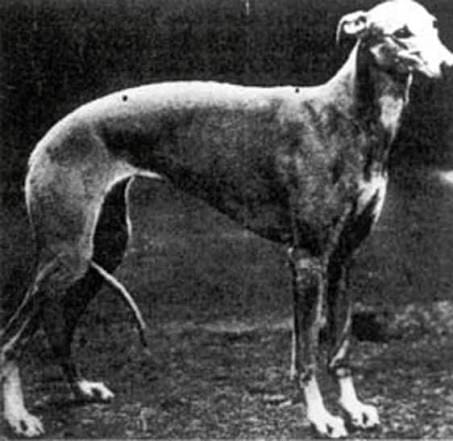
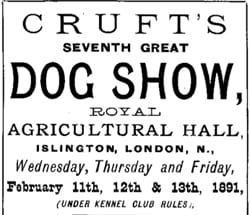
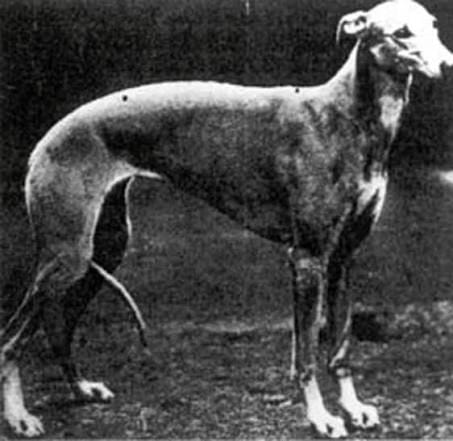
Charles Cruft had a genius for promotion, and his show quickly became the highlight of the canine calendar. The arrival of the Best in Show award in 1928 gave the event its crowning moment, and that first winner, a Greyhound chosen from nearly ten thousand competitors, set the tone for a contest that still captivates the nation every spring.
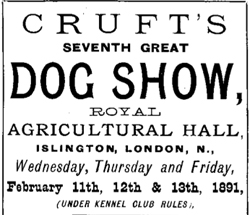
Learn more: The 1800s- Crufts was founded by showman Charles Cruft and first held in 1891 in Islington, London.
- The famous Best in Show title was not introduced until 1928.
- The first ever Best in Show winner was a Greyhound named Primley Sceptre.
- Crufts is now recognised as the largest dog show in the world.
Into the modern home
Through the twentieth century, the dog's place in British life became firmly domestic. No longer just workers or status symbols, dogs settled in as everyday members of the household.
As Britain became more urban and homes grew more comfortable, dogs came indoors for good. The relationship deepened from usefulness into genuine companionship. By the end of the century, the question was no longer what a dog could do for you, but simply the pleasure of its company, a shift that set the stage for the boom still unfolding today.
Learn more: The 1900s- Dogs became fixtures of family photographs, holidays and daily routines.
- Veterinary care, commercial dog food and training advice grew into established industries.
- Breeds rose and fell in popularity as fashions and lifestyles changed.
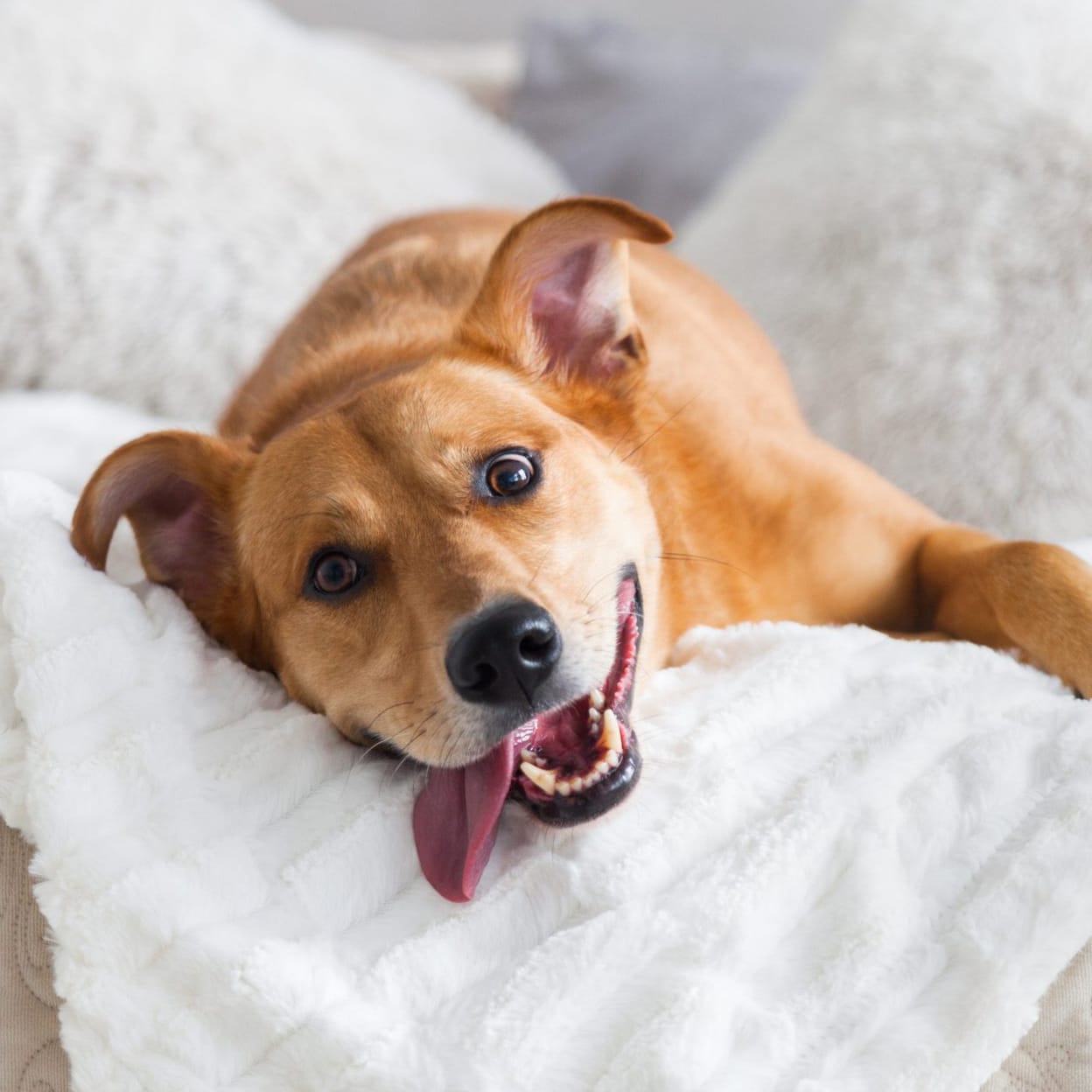
- The dog moved from the yard to the hearth, and often to the foot of the bed.
Today's boom
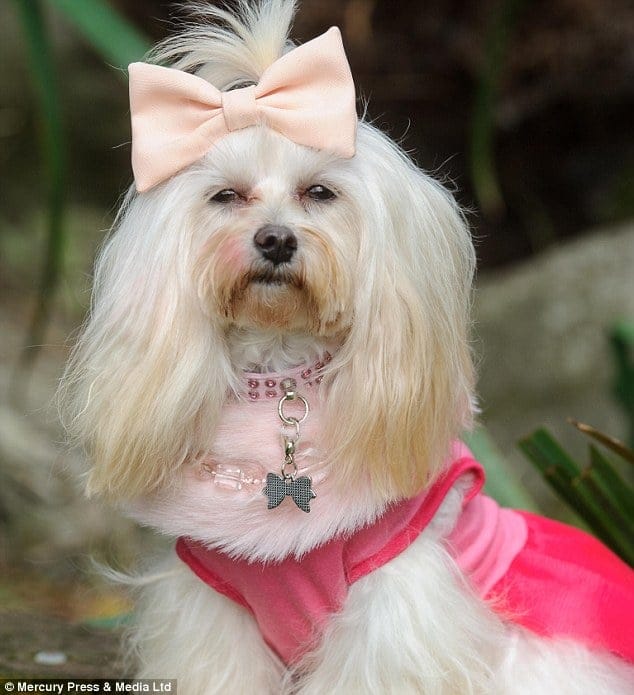
Britain's dog population is bigger than ever, and still growing. A new generation of owners, and a global pandemic, have reshaped which dogs we choose and why.
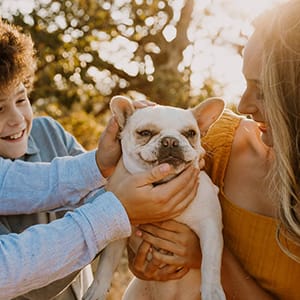
The most common breeds tell the story of changing tastes. Among dogs of all ages the classic Labrador still leads, but among puppies the French Bulldog and the Cockapoo have raced to the top, a clear sign of the designer-crossbreed boom. The pack brings both worlds together, the old favourites and the new, each with centuries of history behind them.
Learn more: Today's Crossbreeds- The UK dog population has risen from around 8.2 million in 2011 to between 11 and 13 million today.
- More than three million UK households welcomed a new pet during the pandemic.
- Younger owners now make up a fast-growing share of the dog-loving population.
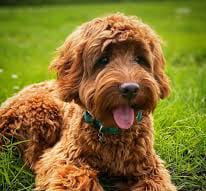
- Designer crossbreeds like the Cockapoo and Labradoodle have surged in popularity.
- The pet-tech market alone, covering smart feeders, cameras and GPS trackers, is now worth over 400 million pounds.
Sources: RVC VetCompass, PDSA, UK Pet Food, the Royal Collection Trust, Historic UK, the Kennel Club / Crufts and Guinness World Records. Some historical tales are popular legend, and population figures are estimates that vary by source.
Chasers
Swift Celtic hounds and greyhound-like dogs pursued deer, hares and other fast-moving game by sight.
Trackers
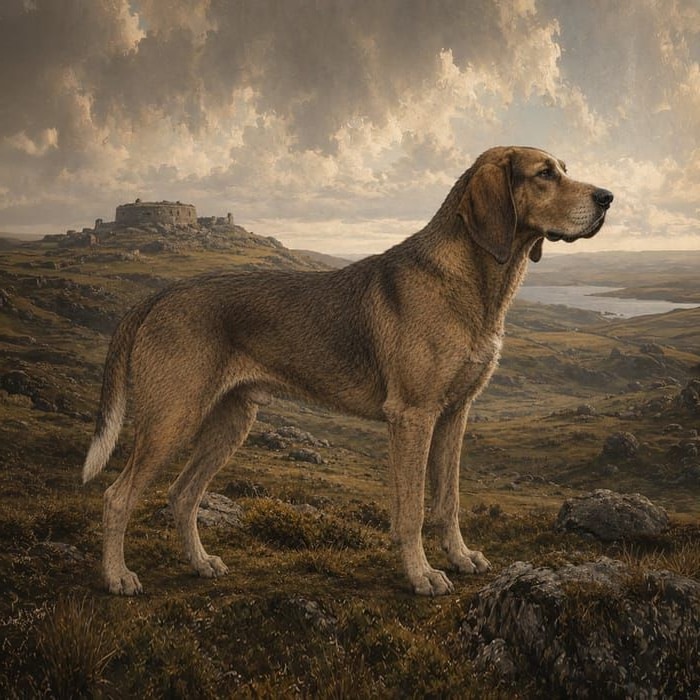
Early tracking hounds followed game by scent, the deep root of Britain's later scent-hound families.
Guards
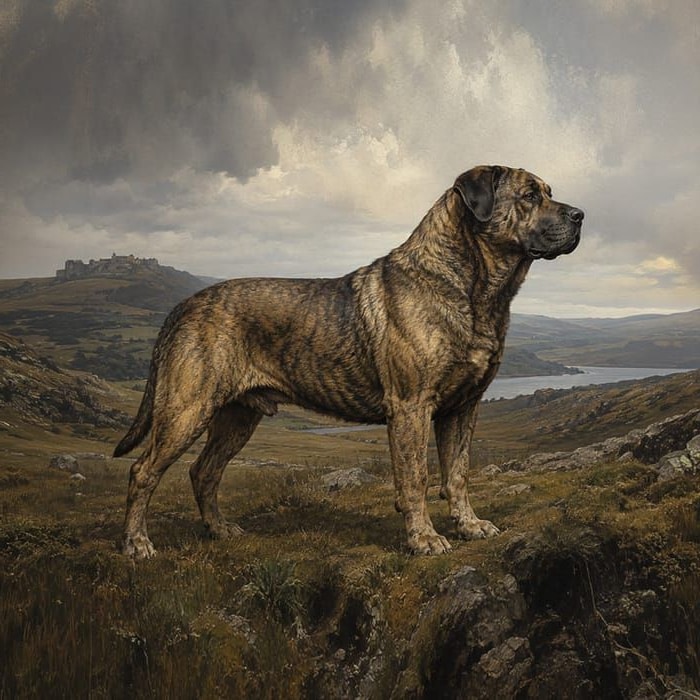
Protected people, livestock and property, and helped control cattle. Roman-period evidence shows dogs chasing vermin from buildings.
Status
Hunting with carefully trained hounds signalled wealth, while ordinary households kept practical working dogs.
Did you know?
British hunting dogs were valuable enough to be exported across the Channel almost 2,000 years ago.
Did you know?
Arrian, writing in the Roman period, praised Celtic hounds for speed, spirit and their enthusiasm for chasing hares.
Did you know?
Archaeologists have found dogs of very different sizes in early British settlements, from small animals to dogs approaching wolf size.
Did you know?
The swift coursing hound of the Celts was famous enough in the ancient world to be described in Roman hunting manuals.
At the start of time we did not have writing, so we can only really tell what has happened after we started writing stuff down
Trackers
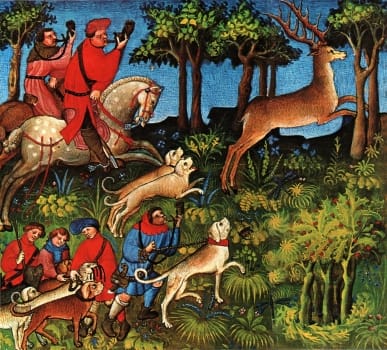
Medieval scent hounds followed an animal's trail by nose, sometimes working together in organised packs.
Drovers
Shepherds' and drovers' dogs moved sheep and cattle across the hills and along the long drove roads to market.
Earth dogs
Small, determined earth dogs followed fox and badger underground, the working root of Britain's terriers.
The hunt
The organised hunt gave hounds their names and their jobs, from the rache that ran by scent to the greyhound slipped from its lead.
Did you know?
Medieval pictures often show different dogs doing different jobs, including scent hounds hunting in packs and greyhounds held on leads before the chase.
Did you know?
The Master of Game, an English hunting book from the early 1400s, describes running hounds, greyhounds, alaunts, spaniels and mastiffs, each with its own work.
Did you know?
Under medieval forest law, large dogs kept near royal forests could be required to have claws removed so they could not chase the deer.
Did you know?
The drove roads that dogs and drovers used to walk cattle to market were in use for centuries, and stretches of them can still be walked today.
By now people were writing things down, so we know which dogs did which jobs
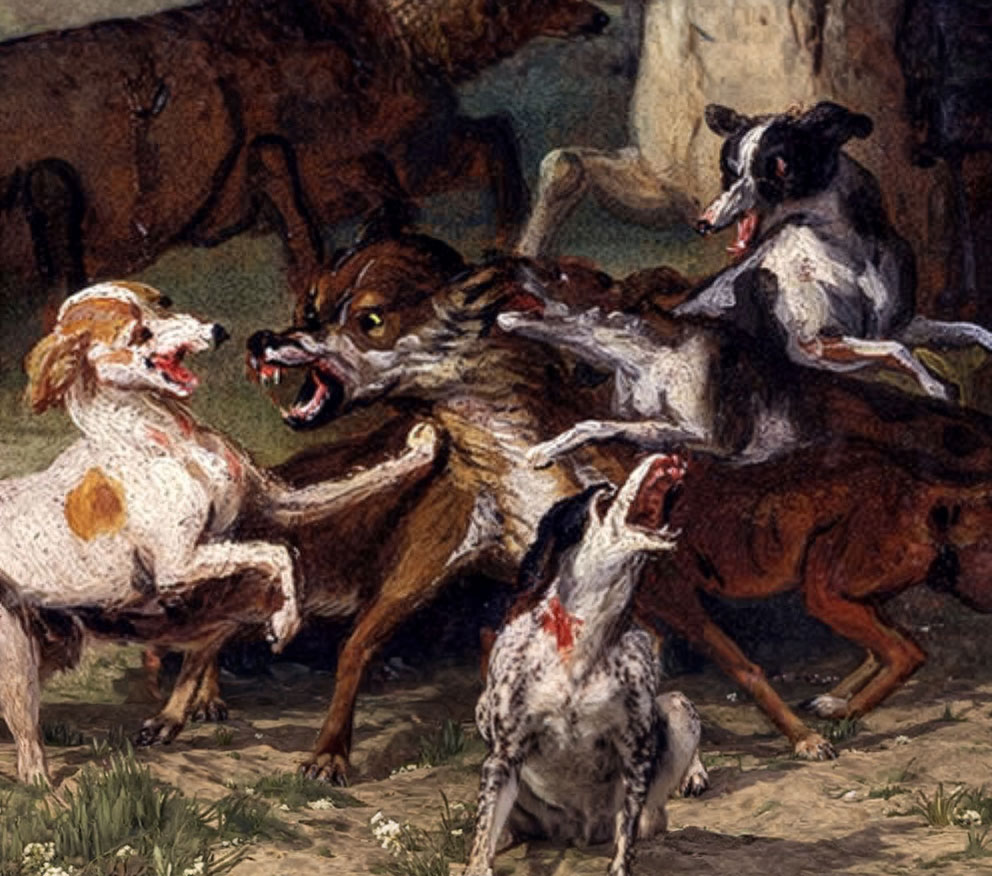
Greedy
Norman kings set aside up to a third of England as royal forest, where only the king could hunt.
Gruesome
Commoners living near a forest had to have their dogs 'lawed', having three toes chopped off, to stop them chasing the king's game.
Lavish
By Tudor times, Henry VIII kept spaniels, beagles and greyhounds, and owned sixty-five dog leashes.
Lapdogs
Ladies of the court adored their little lapdogs, which they fondly called 'comforters'.
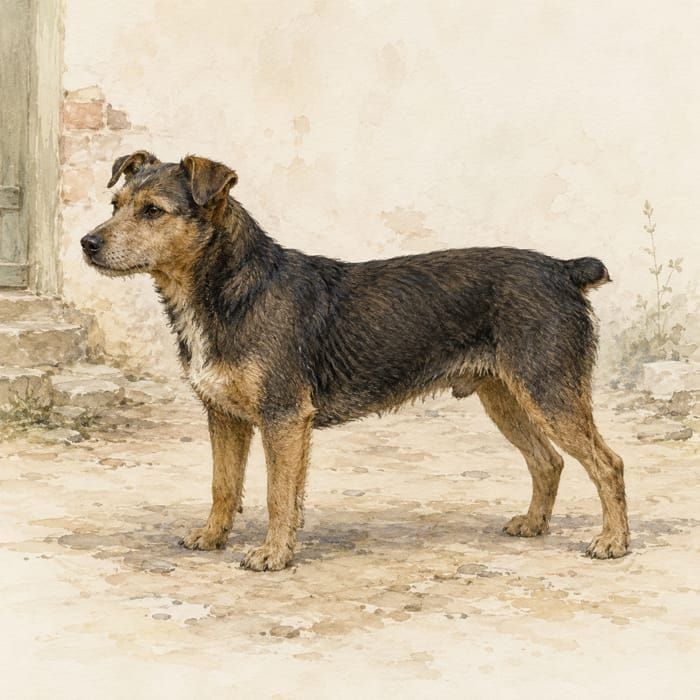
Did you know?
So many dogs followed their owners to church that Tudor parishes paid a 'dog whipper' to keep order, armed with a three-foot whip and a pair of wooden tongs.
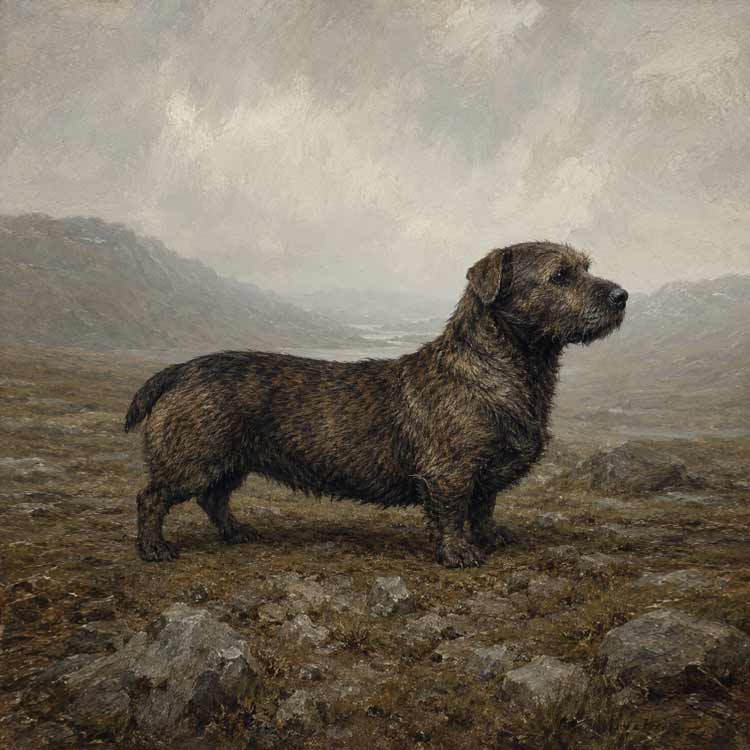
Did you know?
Medieval law valued a dog by its job, with a shepherd's dog, a guard dog and a hunting hound each worth a different sum.
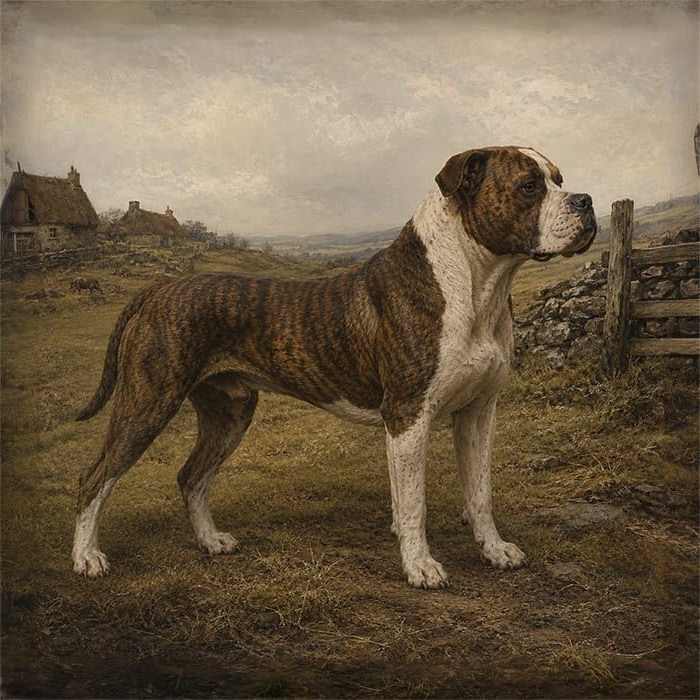
Did you know?
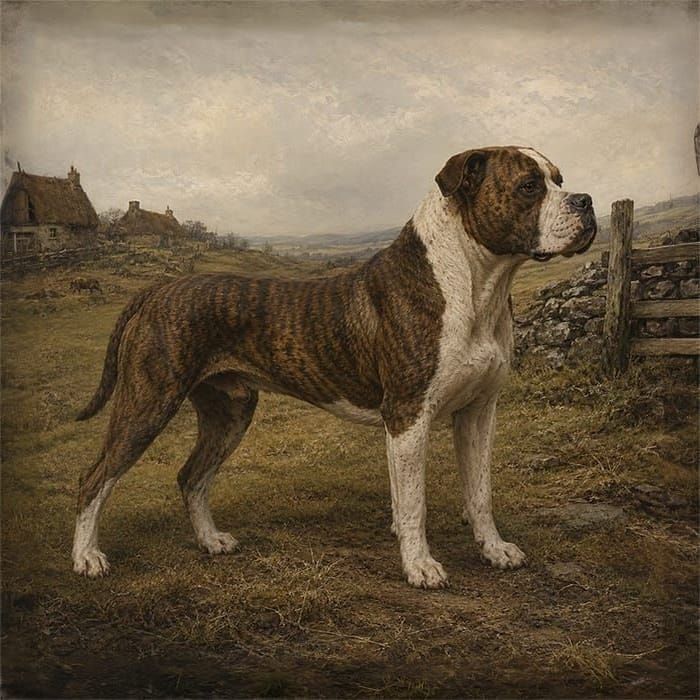
Mastiff-type 'bandogs' were chained up by day and let loose at night to guard farms from thieves and even wolves.
Did you know?
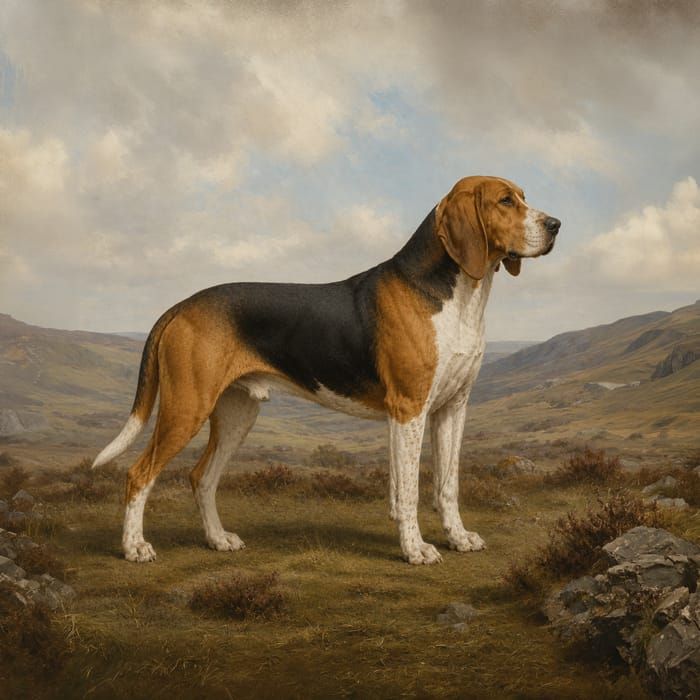
One of the first books written in English, 'The Master of Game' from around 1406, was a guide to hunting hounds and their care.
The Tudors kept dogs for work and for show, and started writing down which was which
Herding
Herding breeds like the Border Collie were bred to gather and move livestock across the hills.
Ratting
Terriers were developed to hunt vermin, going to ground after rats, mice and foxes.
Catching
Sighthounds such as the Greyhound and Whippet were built for speed and the chase.
Guarding
Guarding and droving breeds protected homes and moved cattle to market.
Did you know?
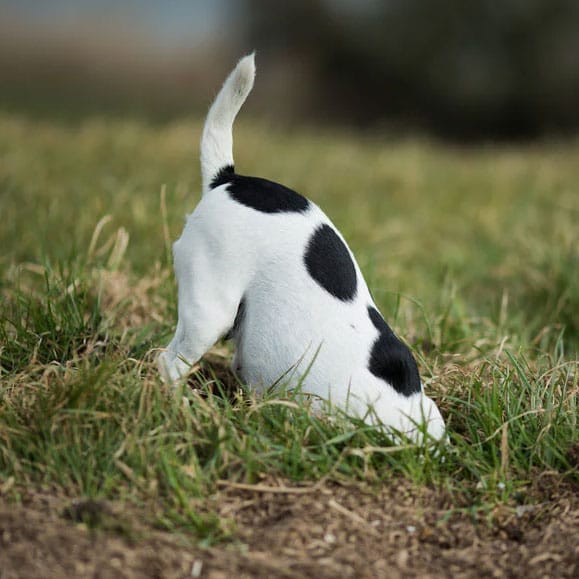
The word 'terrier' comes from the Latin 'terra', meaning earth, after their habit of digging into burrows to flush out prey.
Did you know?
Turnspit dogs were bred to run inside a wheel that turned meat roasting over the kitchen fire.
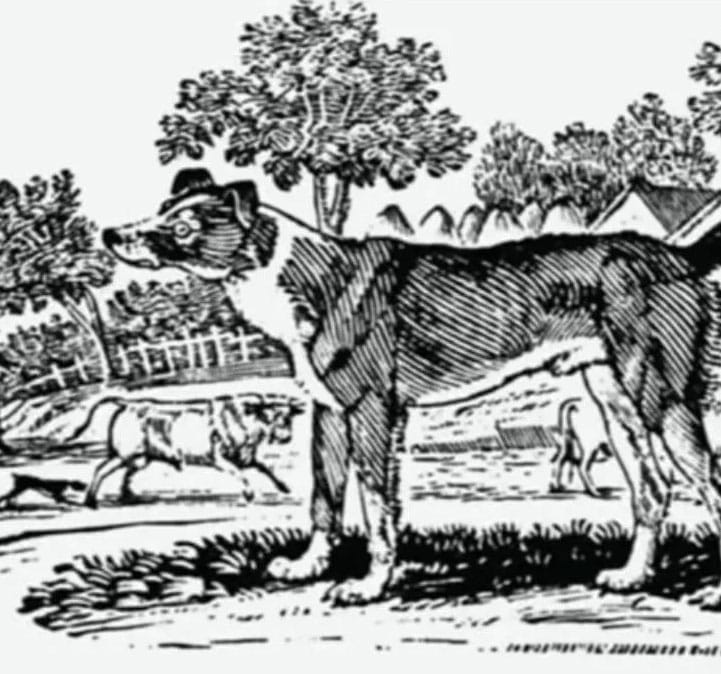
Did you know?
Drovers' dogs walked cattle and sheep hundreds of miles to market, then often found their own way home.
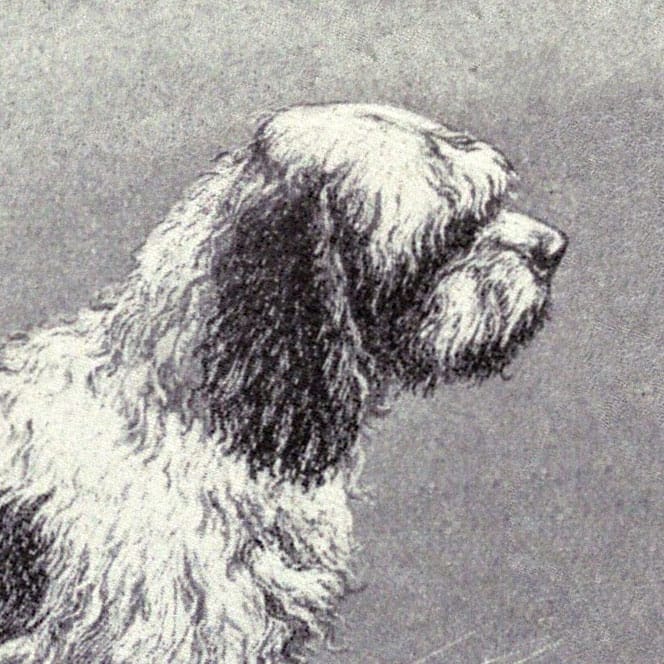
Did you know?
Water dogs hauled fishing nets and lines for coastal fishermen, their thick coats built to shrug off the cold.
Farms, hunts and city streets each wanted a different dog, so Britain started building them
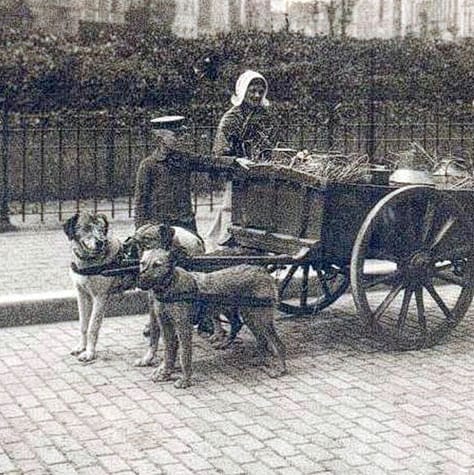
Dog taxis, dog carriages
Working dogs pulled small carts of milk, bread, fish and other goods for street traders.
London dog ban
The Metropolitan Police Act of 1839 banned dog-drawn carts within 15 miles of Charing Cross.
More bans on dogs
A national ban on the public highways followed in 1854.
It was for the money
The campaign against dog-carts helped shape Britain's early animal-welfare laws.
Did you know?
One estimate suggests the 1839 London ban alone led to the loss of more than 3,000 working dogs almost overnight.
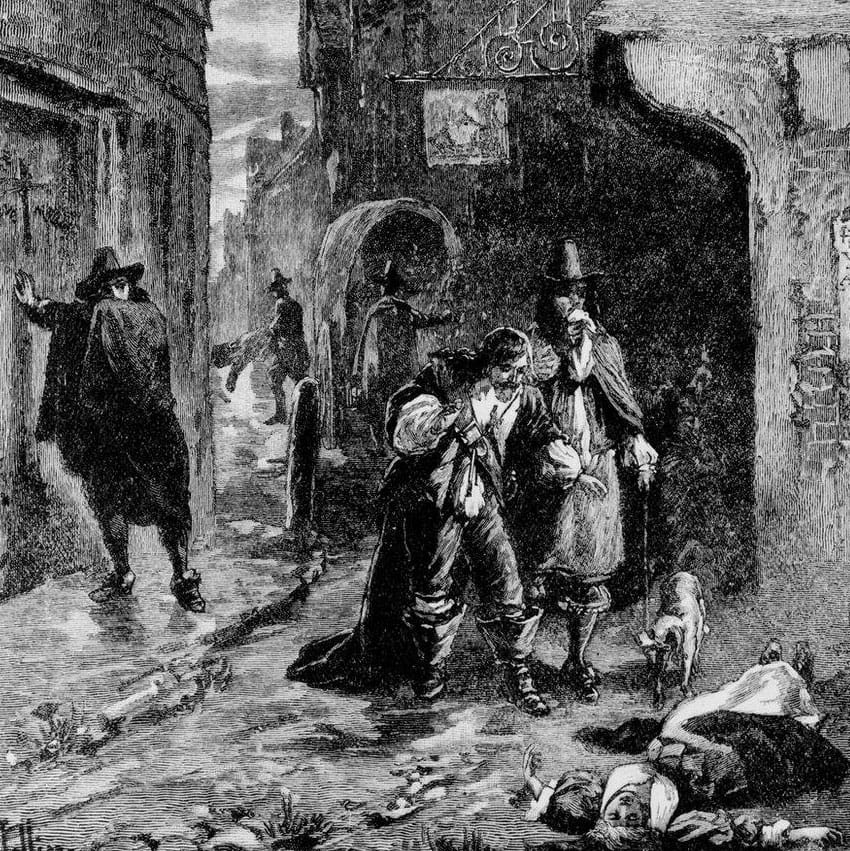
Did you know?
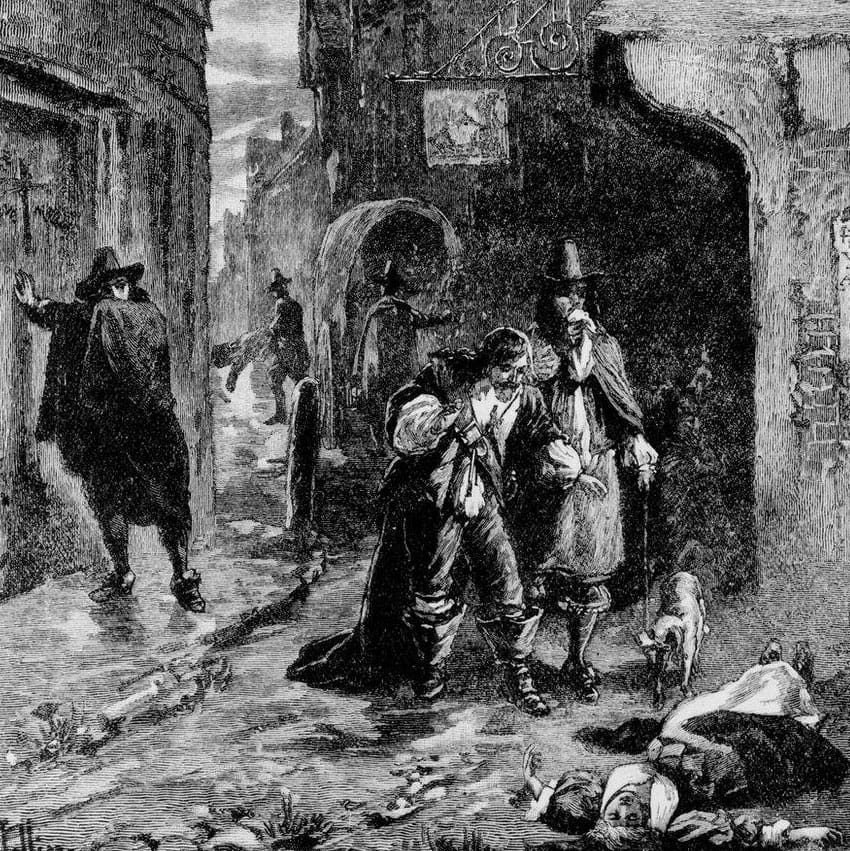
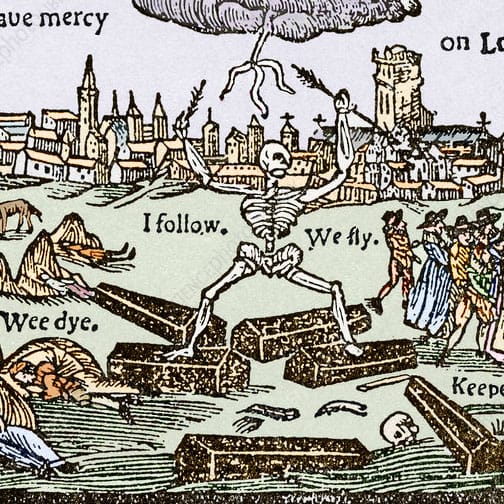
During the Great Plague of 1665, dogs were wrongly blamed for spreading the disease and the city ordered them destroyed.
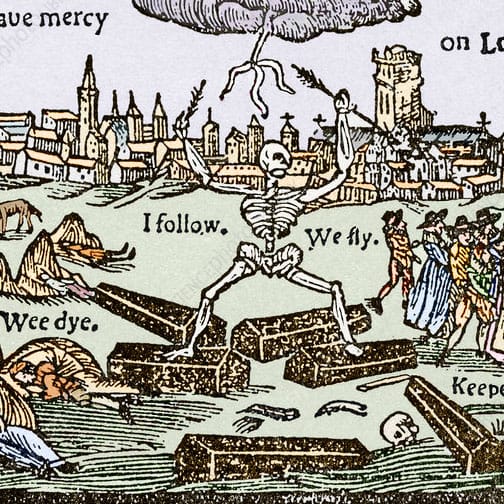
Did you know?
London's dog-catcher killed over 4,000 dogs, which likely made things worse by sparing the rats that truly carried the plague.
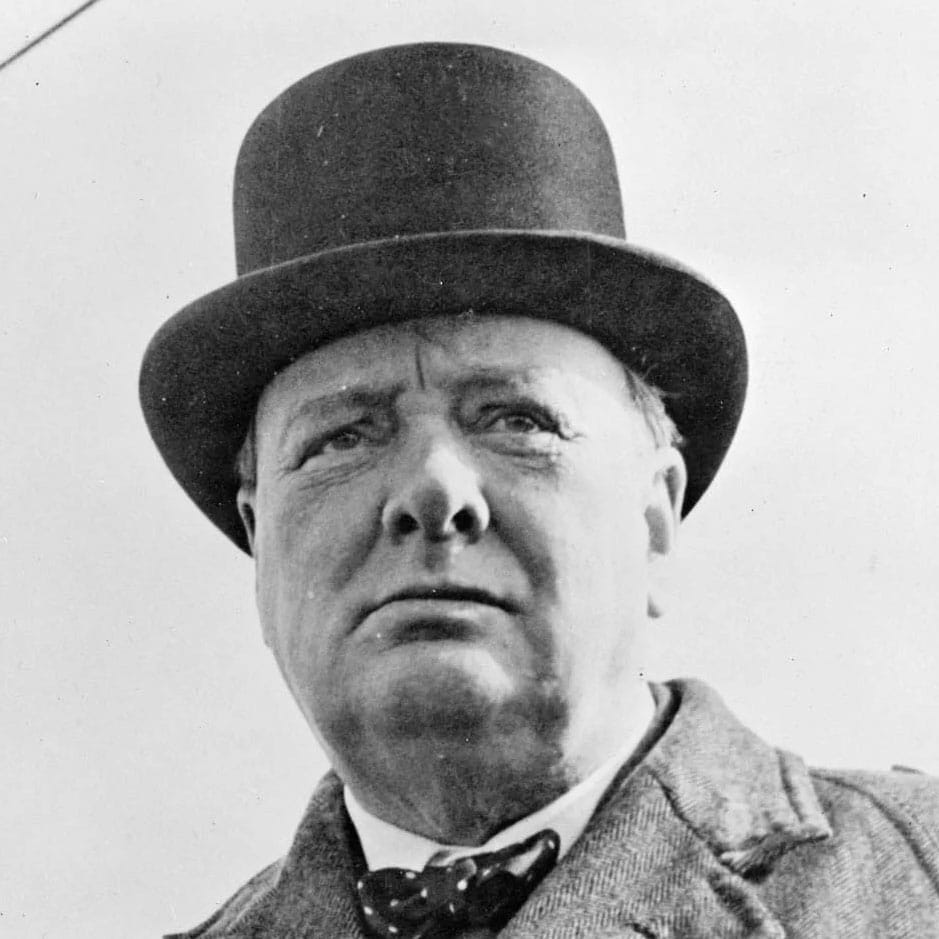
Did you know?
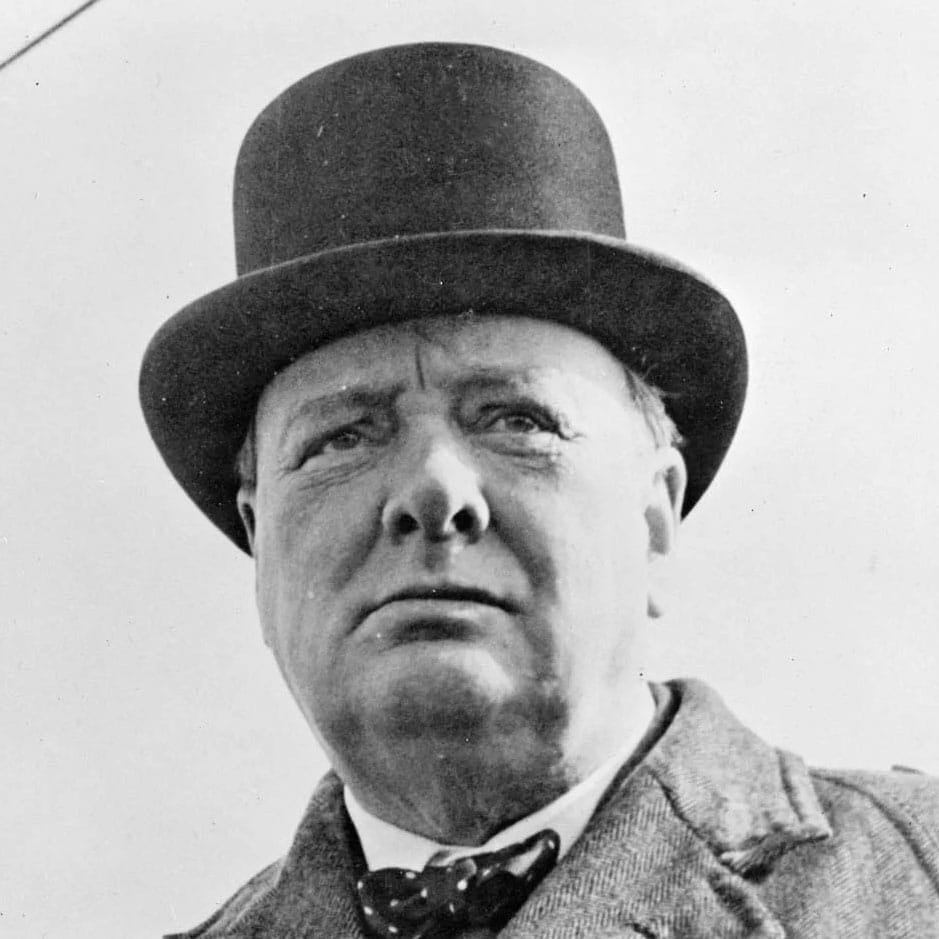
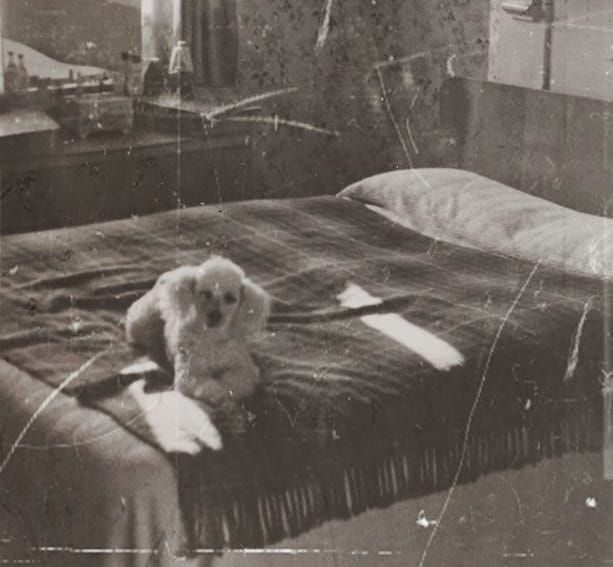
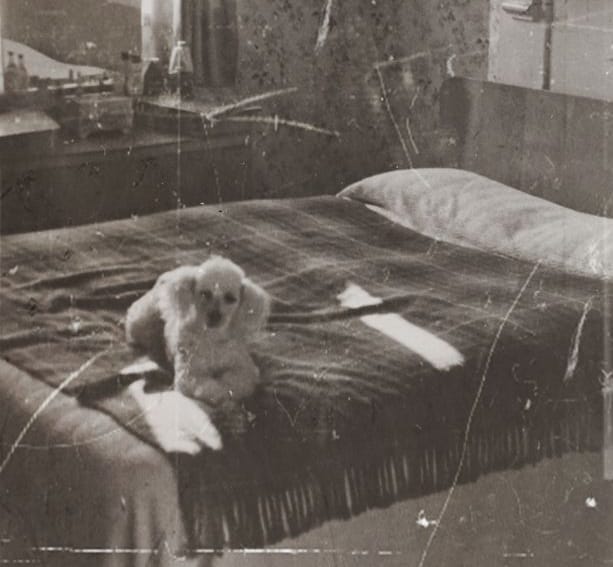
Winston Churchill, nicknamed the British Bulldog, in fact kept a brown poodle named Rufus who slept by his bed all through the war.
Britain was changing fast, and the dogs changed with it
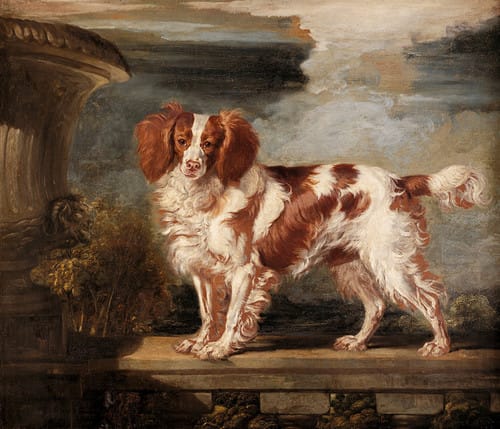
Queeny
Queen Victoria was a devoted dog lover who owned more than eighty dogs across her lifetime.
Spaniel
Her childhood companion was a Cavalier King Charles Spaniel named Dash, painted by royal artists.
Dog Show
Britain held the world's first organised dog show in Newcastle in 1859.
Dog Home
Battersea Dogs Home opened in 1860 and the Kennel Club followed in 1873.
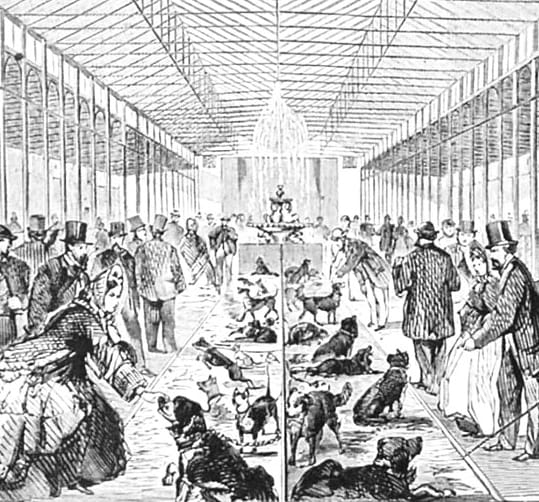
Did you know?
The first dog show, held in Newcastle in 1859, was tacked on to a poultry show and only allowed Pointers and Setters to compete.
Did you know?
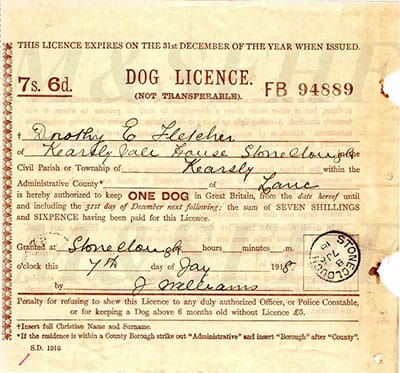
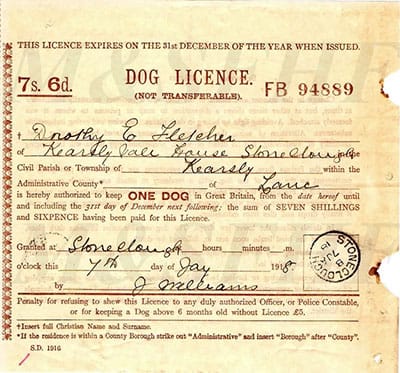
From 1867 every owner had to buy a yearly dog licence, costing seven shillings and sixpence, just to keep a dog.
Did you know?
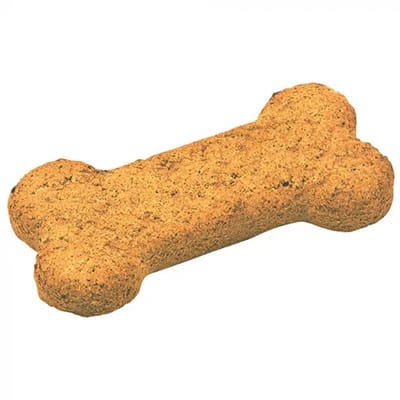
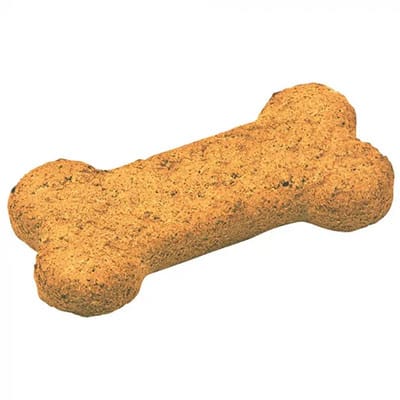
Spratt's began selling the first mass-produced dog biscuits around 1860, the very start of the dog-food industry.
Did you know?
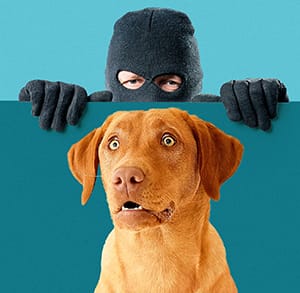
Dog theft grew so common that thieves snatched pampered pets and sold them back to their owners for a ransom.
One kind of dog split into many, and the spaniel family got very big very quickly
Terrier
Bobby was a Skye Terrier belonging to John Gray, a night watchman for the Edinburgh City Police.
Loyalty
After Gray died in 1858, Bobby reportedly refused to leave his master's grave.
Legendary
The story says he kept watch over the grave for fourteen years until his own death in 1872.
Immortalised
A statue and fountain were raised in his honour, and still draw visitors today.
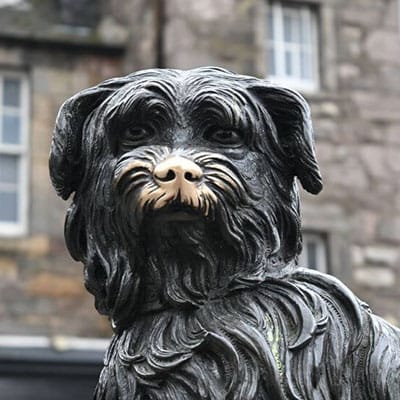
Did you know?
Greyfriars Bobby's headstone reads: 'Let his loyalty and devotion be a lesson to us all.'
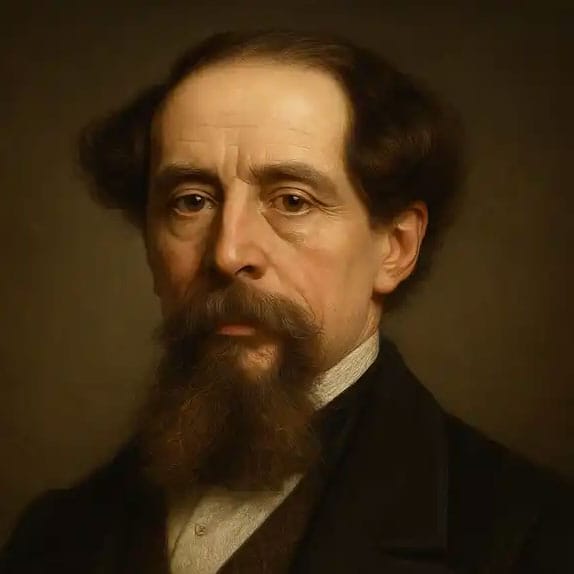
Did you know?
Charles Dickens gave the villain Bill Sikes a fearful dog called Bull's-eye in Oliver Twist.
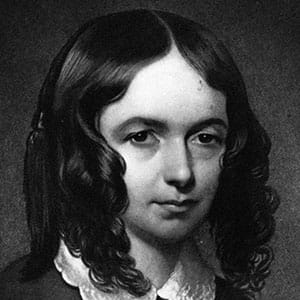
Did you know?
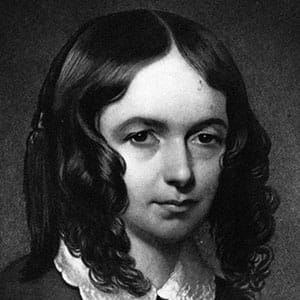
The poet Elizabeth Barrett Browning adored her spaniel Flush, later given his own book by Virginia Woolf.
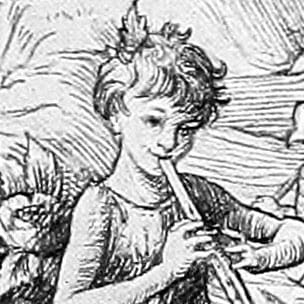
Did you know?
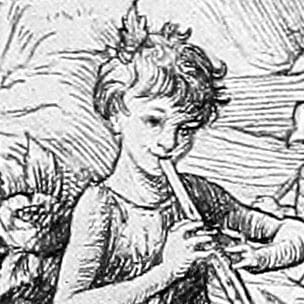
In Peter Pan, the Darling children's devoted nursemaid Nana is a Newfoundland dog.
Dog shows arrived, and how a dog looked started to matter as much as what it did
He wanted to sell more dog biscuits
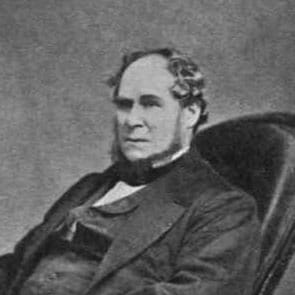
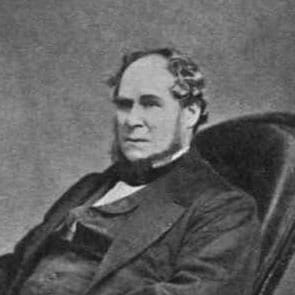
Crufts was founded by showman Charles Cruft and first held in 1891 in Islington, London.
Dog Mecca
The famous Best in Show title was not introduced until 1928.
Greyhound
The first ever Best in Show winner was a Greyhound named Primley Sceptre.
Tonnes of dogs all in 1 place
Crufts is now recognised as the largest dog show in the world.
Did you know?
Primley Sceptre, the first Best in Show winner, was picked from an entry of 9,466 dogs and described by the judge as 'faultless'.
Did you know?
Charles Cruft was a travelling salesman for Spratt's dog biscuits, and his show helped sell ever more dog food.
Did you know?
The first Crufts in 1891 drew 2,437 dogs across 36 breeds; today around 24,000 dogs take part each year.
Did you know?
Charles Cruft never owned a dog himself, for fear of being seen to favour any one breed.
The Kennel Club began writing the rules, and breeds became official
Dogs upstairs
Dogs became fixtures of family photographs, holidays and daily routines.
Dog Doctors
Veterinary care, commercial dog food and training advice grew into established industries.
Dogs as Fashion
Breeds rose and fell in popularity as fashions and lifestyles changed.
A Dogs Life
The dog moved from the yard to the hearth, and often to the foot of the bed.
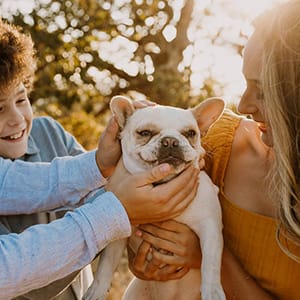
Did you know?
Today around 99 percent of UK dog owners consider their dog to be a full member of the family.
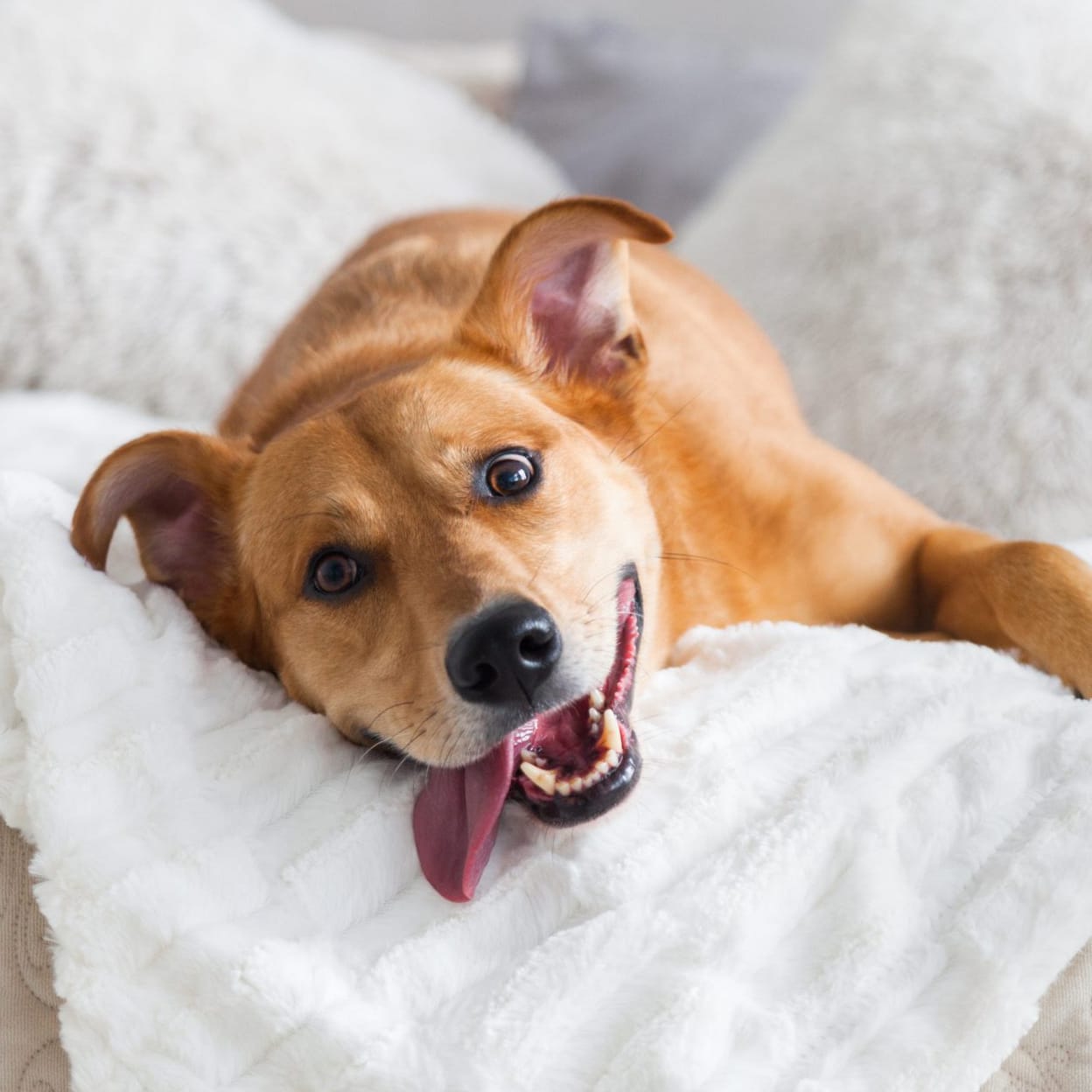
Did you know?
Around a third of British dogs are now allowed up onto their owner's bed to sleep.
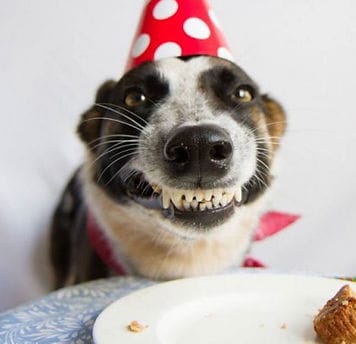
Did you know?
Some 58 percent of owners buy their dog birthday and Christmas presents.
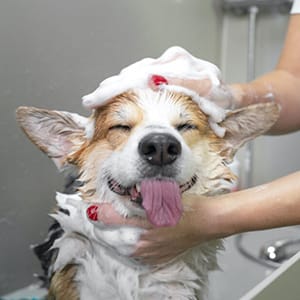
Did you know?
Pampered pets now enjoy spas, bakeries, dog fashion and even their own social media accounts.
Dogs moved off the farm and into the front room
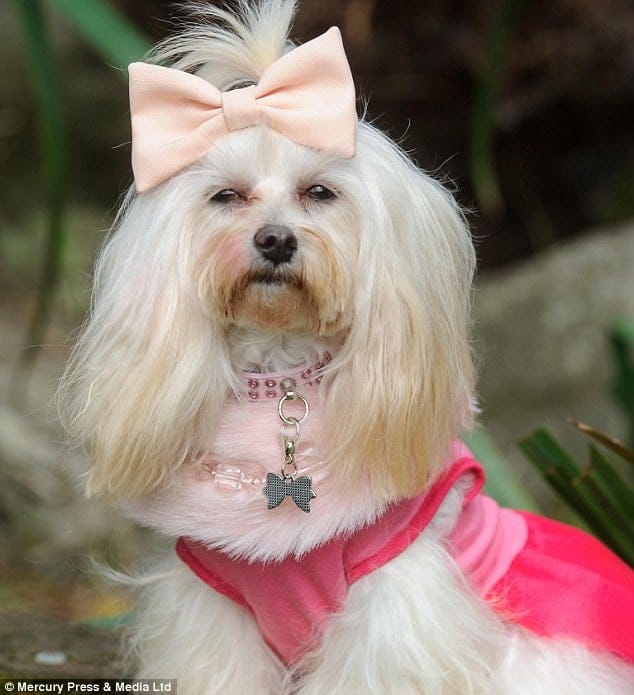
Loads of dogs
The UK dog population has risen from around 8.2 million in 2011 to between 11 and 13 million today.
More dogs
More than three million UK households welcomed a new pet during the pandemic.
Young pups
Younger owners now make up a fast-growing share of the dog-loving population.
Doo's and Poo's
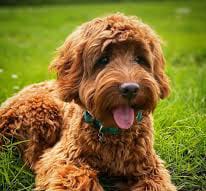
Designer crossbreeds like the Cockapoo and Labradoodle have surged in popularity.
Dog Tracking
The pet-tech market alone, covering smart feeders, cameras and GPS trackers, is now worth over 400 million pounds.
Did you know?
Among dogs under one year old, the French Bulldog and Cockapoo now rank among the three most common breeds in the UK.
Did you know?
British owners now spend around 10 billion pounds a year on their dogs.
Did you know?
There are an estimated 13.5 million pet dogs in the UK, living in roughly a third of all households.
Two breeds, one dog, and a lot of arguments about what to call it