


Medieval Times
In 1066, at the start of the medieval period, William, a duke from Normandy in France, sailed to England proclaiming that the old English king had promised him the crown when he died. He had to fight for it, because the new English king, Harold, did not believe him. He won the Battle of Hastings, took the throne and became known as William the Conqueror.
The King's Forests
He also turned huge areas into royal forests for his own hunting, so families who had always gathered firewood, found food and grazed their animals there were suddenly breaking the law. Press play to watch them grow, then shrink.
William the Conqueror brings forest law from Normandy. The deer and wild boar now belong to the king alone.
- Land
- Royal forest
Simplified map. Forest positions are real, but their shapes and growth are approximate.
Who Owned What in 1086?
William the Conqueror's Domesday Book recorded who held almost every village in England. Each dot is a place in the book, coloured by who held most of it. Tap a button to see whose land was whose.
- 21% the king
- 25% the church
- 54% the barons
13,081 places from the Domesday Book.
Each place is coloured by whoever held most of its value. The far north of England was not surveyed. Data: Professor J.J.N. Palmer and George Slater, University of Hull, via Open Domesday (CC BY-NC-SA).
Did you know?
The Domesday Book (1086)
Twenty years after conquering England, William the Conqueror had his officials record who held what: land, animals, mills and people, in almost every corner of England.
It showed the king kept about a fifth of the land for himself, the church held about a quarter, and his barons held about half.
A forest without trees?
A royal forest was not always a wood. It could include heaths, fields, wetlands and even whole villages.
By the early 1200s, almost a third of England was under the king's forest law, and the deer and wild boar living there belonged to the king alone.
Mind your dog's toes!
Inside a royal forest, nobody could carry a bow and arrows, and dogs had their toes clipped so they could not chase the king's deer.
In 1217 the Charter of the Forest gave ordinary people some of their rights back, like collecting firewood and letting their pigs graze.
Medieval Dogs
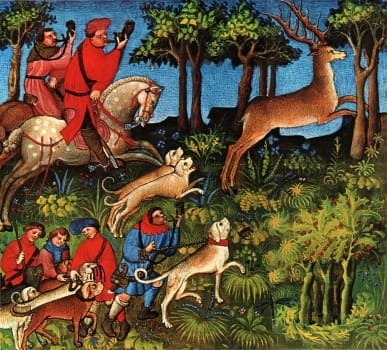
Medieval Britain ran on working dogs. Great households kept organised packs of hounds for the hunt, drovers walked cattle to market with tough farm dogs at their heels, and shepherds relied on quick, biddable herders. A dog's name described its job rather than its breed, and the law took dogs seriously enough to regulate them.
By the Middle Ages Britain's dogs had settled into recognisable working kinds. Hunting treatises described each type and its task, household records listed hounds by the work they did, and forest law regulated which dogs could live near the royal deer. These were still types rather than breeds: a talbot or a rache was a job and a look, not a pedigree, and the same name could cover different dogs in different counties.
Norman kings set aside up to a third of England as royal forest, where only the king could hunt, and the forest laws became some of the most resented in medieval England: even a harmless guard dog could be lamed simply for living near royal land. The law valued dogs by their work, too, with a shepherd's dog, a guard dog and a hunting hound each worth a different sum.
- Medieval scent hounds followed an animal's trail by nose, sometimes working together in organised packs.
- Shepherds' and drovers' dogs moved sheep and cattle across the hills and along the long drove roads to market.
- Small, determined earth dogs followed fox and badger underground, the working root of Britain's terriers.
- The organised hunt gave hounds their names and their jobs, from the rache that ran by scent to the greyhound slipped from its lead.
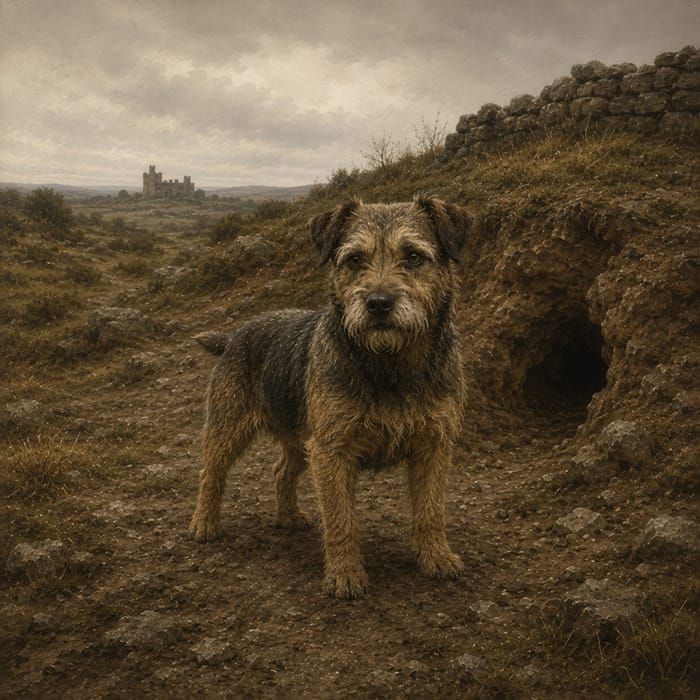
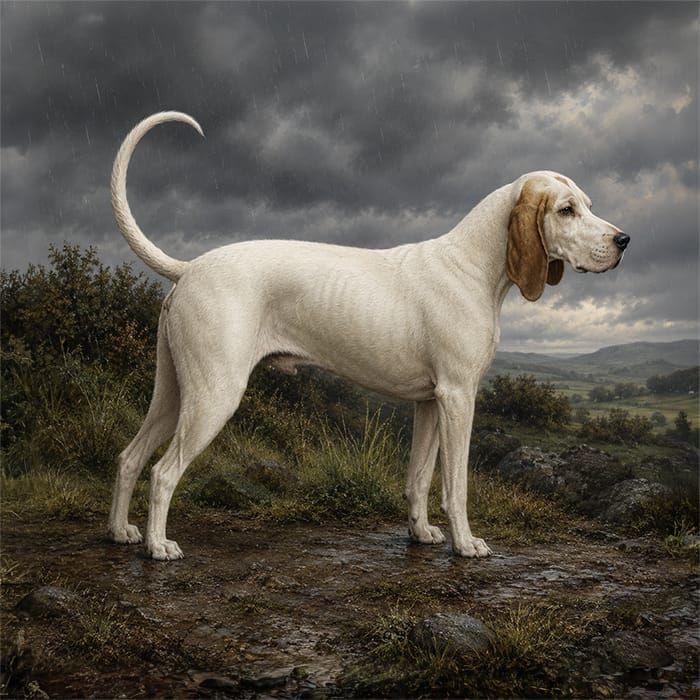
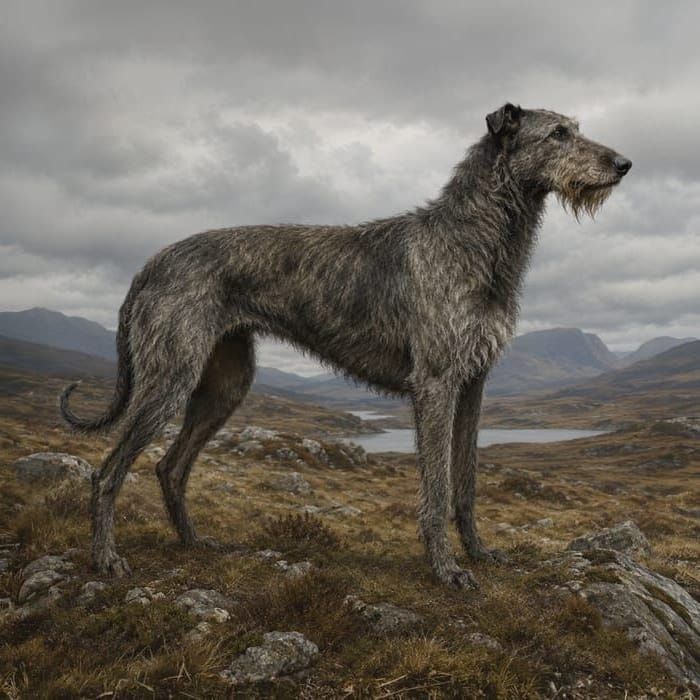
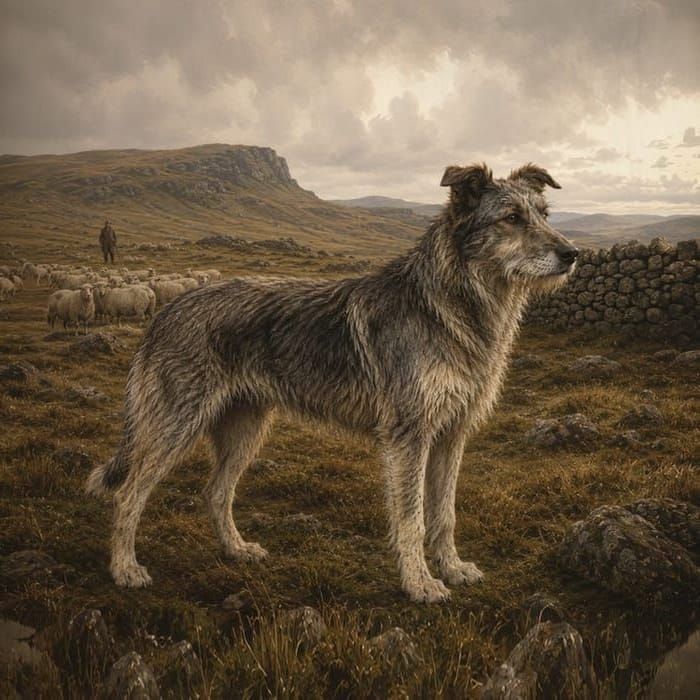
After 1066 hunting became a royal privilege, and huge areas of England were declared royal forest. Dogs living near them could be lawed, meaning toes were removed so they could not chase deer. The same centuries produced some of Britain's most enduring working types: the Southern Hound, the Buckhound, the Land Spaniels and the early terriers that went to ground after vermin.